
Commercial Window Cleaning in Docklands
Purpose-built towers with designed roof access, standing in the most exposed air in Melbourne. The rigging here is straightforward. Choosing the day is the part that takes judgement.
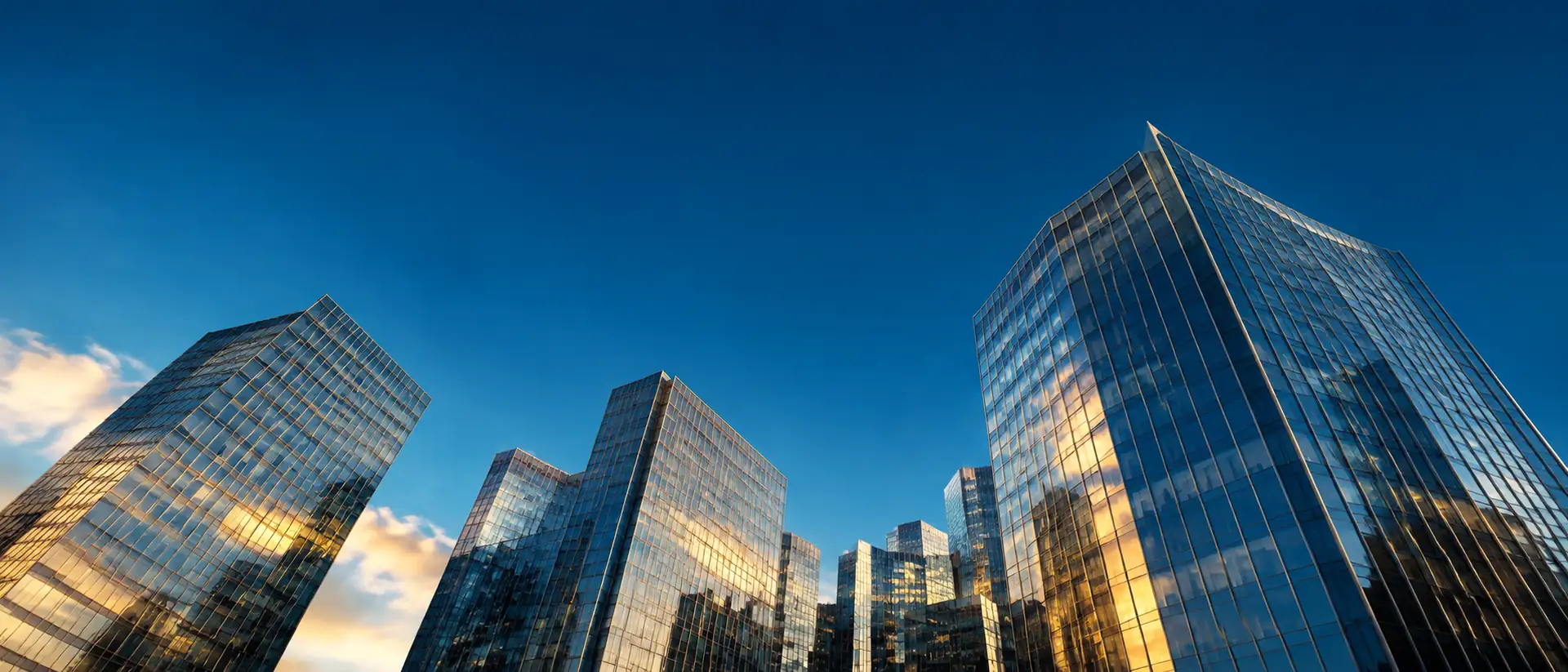
- Designed anchorson most towers
- Weathersets the calendar
- Mixed useoffices above, residents beside
Window cleaning Docklands buildings is, on paper, the easiest high rise work in Melbourne. Almost everything here was built in the last thirty years by developers who had facade maintenance in the drawings from the start, so roof anchors exist, davit bases are where they should be, and edges are designed to be worked over rather than improvised around.
Then you stand on one of those roofs. There is open water on two sides, no older stock upwind to break anything, and a gap between the towers that turns an ordinary breeze into something a rope crew will not work in. More Docklands days get lost to wind than in any other precinct we cover, and any contractor who tells you otherwise has not spent much time on the roofs.
So the skill in this precinct is scheduling rather than rigging. Every precinct we cover, and how each one differs, is laid out under areas we serve across Melbourne.
What kind of buildings does window cleaning Docklands usually mean?
Waterfront commercial towers, mixed-use buildings with offices over apartments, and ground-level retail along the promenades. Nearly all of it is modern curtain wall with designed facade access.
Around Victoria Harbour and Collins Wharf the stock is corporate: large floor plates, sealed glazing, and tenants who expect the building to look like the rent they pay. Those towers are cleaned on a program rather than by request, usually a few times a year on the facade with the lobby and internal glass far more often.
The mixed-use buildings are a different brief. An office podium with apartments above means two payers, two expectations and two sets of access rules on one address, and the work has to be split cleanly so nobody is invoiced for somebody else's glass.
At ground level the promenade retail carries a problem the towers do not: salt. Glass a hundred metres from open water picks up a haze that ordinary washing leaves behind, and it comes back faster than street grime does further inland.
- Commercial towers with designed roof access.
- Mixed-use buildings, offices below and residents above.
- Promenade retail, where salt haze returns quickly.
- Podium and atrium glass, easy to leave out of a scope.
- Car park and plant screens, rarely quoted, often needed.
How much does the wind really change things?
Enough to decide the schedule rather than inconvenience it. Rope work stops well below the speed that feels dramatic at street level, and the reading that counts is taken on the roof, not from an app.
A technician on a rope is a sail. Once the air moves enough to swing a person away from the facade, the work stops being precise and starts being a hazard, and gusts matter more than the average because they arrive without warning. The call is made by the supervisor on the roof and it is not negotiable.
Docklands makes this worse in two ways. There is nothing upwind to slow the air coming off the bay, and the towers sit close enough to funnel it between them, so speeds at height can be well above what the forecast for the city suggests. A morning that looks fine from the tram can be unworkable thirty floors up.
What we do about it is plan for losing days rather than pretend we will not. Facade work is booked in blocks with spare dates behind them, and elevations are ordered so the sheltered faces can be done on a morning when the exposed ones cannot. Whatever a gust shuts down goes back in the calendar on the figure you already signed.
 The rigging is the easy part here. Picking the day is the work
Which services suit this stock?
Facade cleaning on a program, internal office glass monthly to quarterly, and a separate arrangement for any residential levels. Salt exposure pushes the waterfront elevations onto a shorter cycle than the sheltered ones.
| Part of the building | Usual cycle | Why |
|---|---|---|
| Exposed waterfront elevations | Three to four times a year | Salt haze and driven rain mark them fastest |
| Sheltered inland elevations | Twice a year | Less exposure, same access cost |
| Office interiors | Monthly to quarterly | Partitions and entry glass marked by hands |
| Lobby and podium | Weekly to fortnightly | Foot traffic at eye level |
| Residential levels | Twice a year, by agreement | Separate payer, resident notice required |
Splitting a building by exposure rather than cleaning all four faces on the same cycle saves money on buildings like these, because the access is already rigged and adding one elevation costs far less than a separate visit. It only works where somebody writes the split down, which is what a program document is for. The arrangements themselves sit under scheduled window cleaning programs.
Where a tower has apartments as well as offices, the residential side is quoted its own way, with notice to residents and balcony access agreed in advance. That side of the work is described under strata and apartment window cleaning.
What is different about working on site here?
Everything is newer and better organised than the CBD, which helps, but the public spaces are busier than they look. Promenades, plazas and shared podiums all need the ground controlled before anyone goes over an edge.
Building management here tends to be genuinely good. Roof access is documented, inductions are run properly, and goods lifts can usually be booked without a fight. That alone takes a day out of a large facade job compared with older stock elsewhere in the city.
The catch is that Docklands ground level is somewhere people go rather than somewhere they pass through. A drop that lands over a restaurant terrace or a walking route to the stadium needs a wider exclusion zone than the same drop over a quiet footpath, and event days change the picture entirely.
We plan around that rather than through it. Exposed public areas get done early, terraces get done before service starts, and anything that clashes with a major event at the stadium moves rather than being attempted with barriers in a crowd.
The same applies to parking. There is more of it here than in the grid, but loading into a tower dock still needs a booking, and turning up without one is the fastest way to lose a morning.
How do you get a Docklands price?
Send the address, the storey count and whether the building has its own cradle. Most Docklands towers have documented roof access, which makes them quicker to quote than older stock.
Ask for the weather policy in writing while you are at it, because here that clause matters more than the rate does. Start at get a quote, or read the method behind the figures under commercial window cleaning cost.
- Wind-stopped work rebooked at the agreed price.
- Elevations split by exposure so you pay for what needs it.
- Residential and commercial scopes kept separate.
- Spare dates held behind every facade booking.