
High Rise Window Cleaning in Melbourne
Towers, curtain walls and apartment blocks cleaned from the parapet downwards, either on rope or from a cradle the building already owns. We plan the access before we price the job, and the paperwork lands in your inbox before the crew arrives on site.
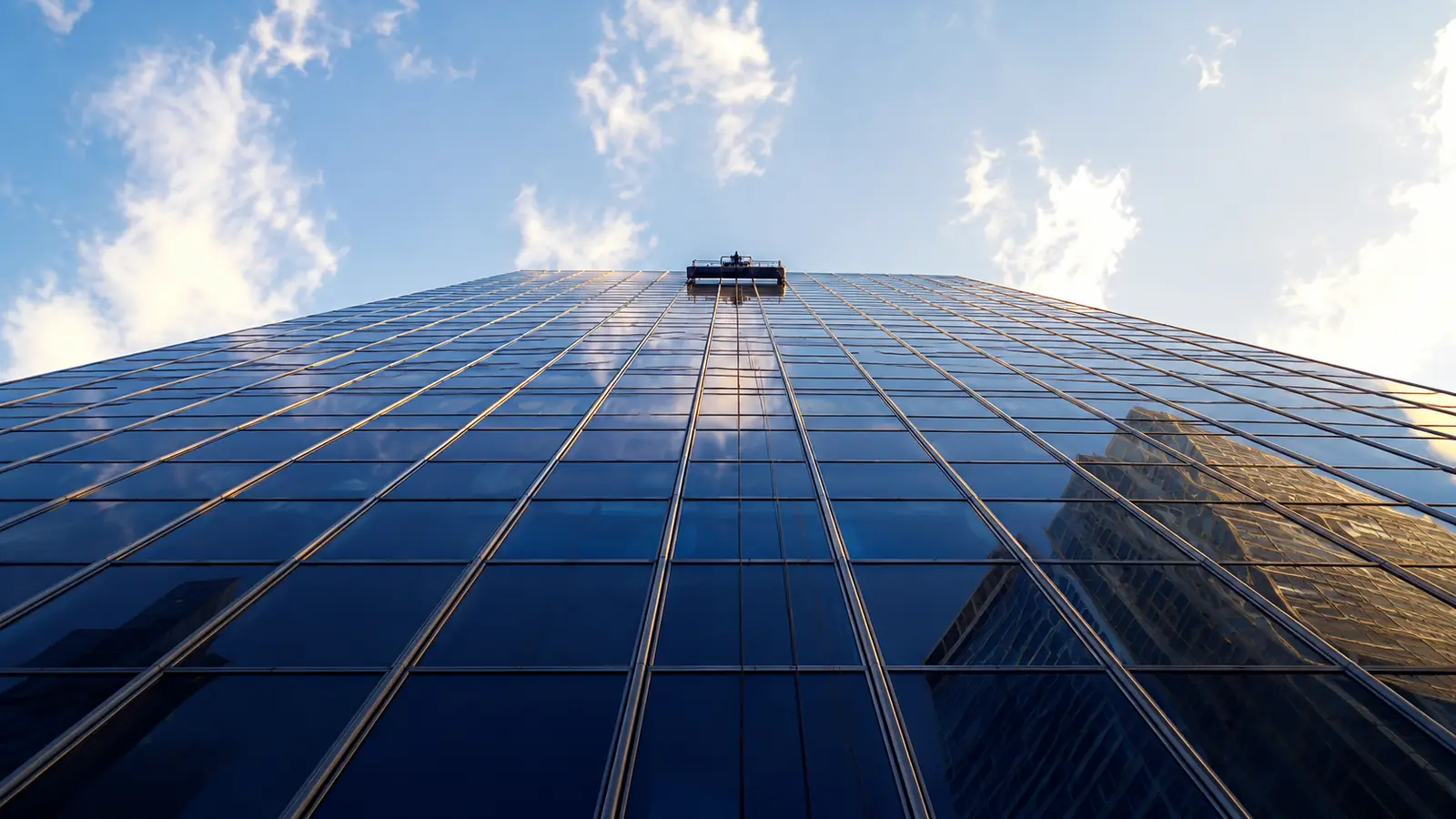
- Ropeor the building's cradle
- Anyfacade height
- 24 hrsto a fixed price
- IRATA rope accessTwo ropes on every descent
- Cradle trainedWe use the unit you already have
- SWMS per buildingWritten for your site, not generic
- Wind plannedSpare days built into tower jobs
High rise window cleaning in Melbourne is what happens once a building outgrows a pole. Somewhere around the fifth or sixth floor the water stops arriving with enough pressure to matter, the pole gets unwieldy in the wind, and the only sensible ways left are the rope, the cradle the building came with, or a machine big enough to reach. This page is for the facility manager, building manager or owners corporation manager who has a tower on the books and needs the glass cleaned without an incident, a road closure or a surprise invoice.
We clean high rise buildings across Melbourne by rope access, by building maintenance unit, and with poles and platforms for the podium and the street-level glass underneath. The access method is not a preference. It comes from what the building has on its roof, how the facade is shaped, and what sits at the base. A tower with a cradle in service gets cleaned differently to an identical tower whose cradle is out for repair, and both are different again to a stepped building with feature fins.
What follows is the whole job in order: how a descent actually runs, when rope beats the cradle, what we check before anyone goes over the edge, how Melbourne weather moves the schedule, and what drives the number on the quote. If you would rather see the other building types first, the full list sits on our window cleaning services page.
How does high rise window cleaning actually work?
A technician is lowered down one face of the building on a working rope, with a second rope as backup, cleaning a vertical strip of glass on the way down. They climb back to the roof, move the ropes sideways, and repeat until the elevation is finished.
- Rig the roofRopes are tied to certified anchors, edge protection goes on, and the rescue kit is set up before anyone leaves the parapet.
- Close the groundA spotter and an exclusion zone go in below, sized to the height, so nothing can pass under the technician.
- Work the dropThe technician descends a strip roughly a metre and a half wide, washing and squeegeeing each pane, frames and sills included.
- Move and repeatRopes shift across the parapet for the next strip. A crew of two usually runs several drops a day, weather allowing.
The pattern is the same whether the technician hangs from a rope or stands in a cradle. What changes is how they get to the glass and how much of the facade they can cover before repositioning. The same sequence, with each piece of equipment explained, is set out in how high rise windows are cleaned.
One thing worth knowing before you compare quotes: the cleaning itself is the quick part. Rigging, moving ropes, packing down and the compliance work either side of the job take longer than the washing does. A contractor who quotes only for time on the glass has either done this before and left something out, or has not done it before at all.
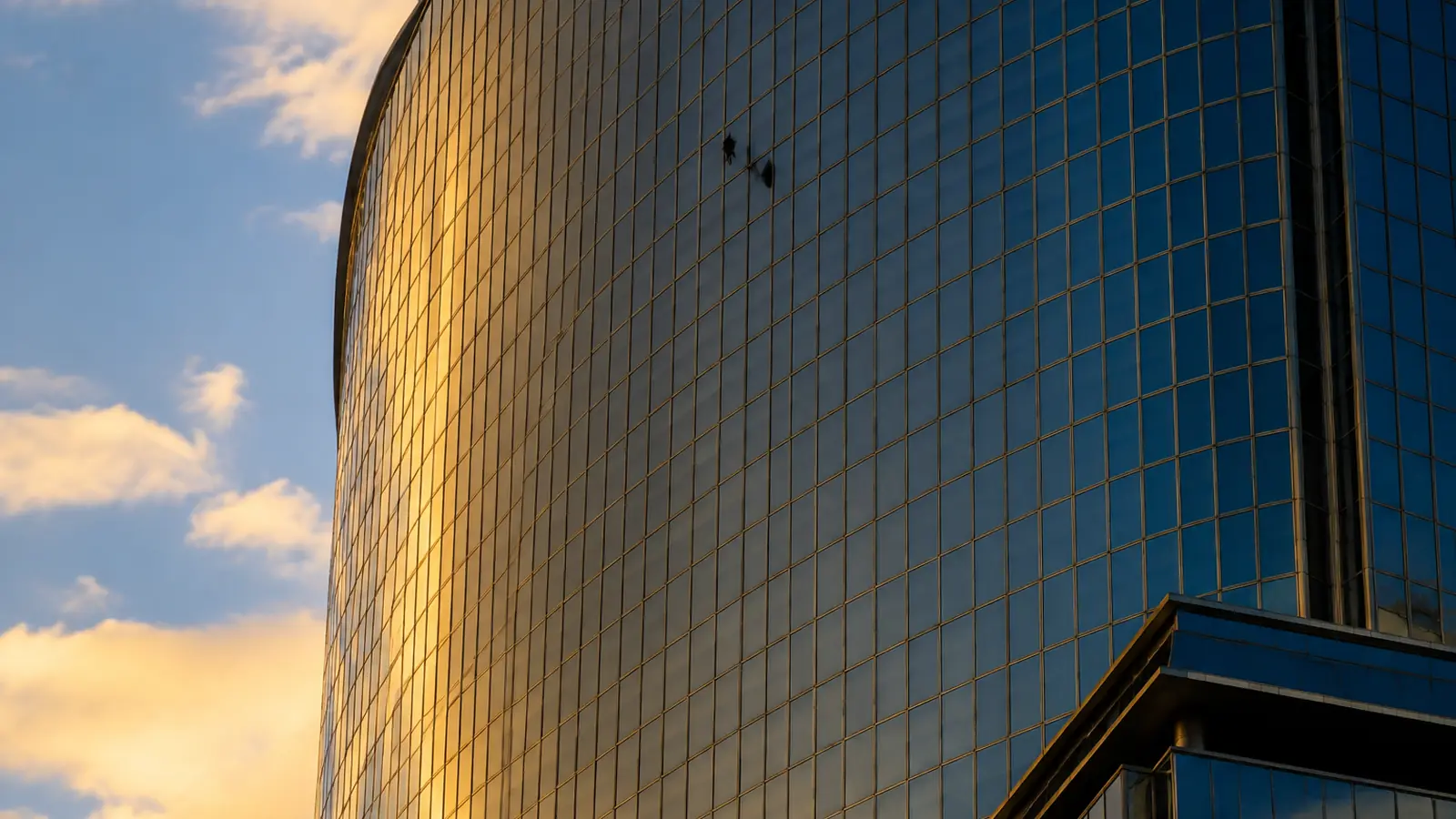 A drop in progress: working line, backup line, and a strip of glass finished on the way down
When is rope the right call on a tower?
When the building has no cradle, when the cradle cannot reach part of the facade, or when hiring a machine big enough would cost more than the clean. Rope also wins where the ground below is too tight for a lift.
Most Melbourne towers fall into at least one of those categories. Plenty were built without a maintenance unit. Plenty more have one that covers the flat elevations but cannot swing into a recess, reach a light well, or get around a corner where the facade steps in. Rope handles all of it, because the technician can be positioned anywhere there is an anchor above.
There is a cost argument too. A rope crew arrives in a van. The alternative on a tall building is a large boom lift on a truck, sometimes a road occupancy permit, sometimes traffic control, and always a bigger bill before a single pane is touched. When the facade suits both, rope is usually the cheaper of the two by a clear margin.
What rope cannot do is work without sound anchors, and it cannot work in high wind. Those two constraints shape every tower job we quote. The method itself, the certification behind it and how a descent is planned are covered on our rope access window cleaning page.
What happens if the building has its own cradle?
We use it. A building maintenance unit that is in service and certified is normally the quickest option on a wide unbroken elevation, and it adds nothing to your bill because the machine is already up there.
Before a booking is confirmed we ask the building manager three things about the unit: when it was last inspected, whether the service record is current, and whether there are any restrictions on the log from the last technician who used it. If the answers are good, the cradle does the broad elevations and we plan rope drops only for the parts it cannot reach.
If the unit is out of service, overdue for inspection, or the paperwork cannot be found, we do not use it. That sounds obvious, and it is, but it is also the point where a job can quietly go wrong. A cradle that has not been signed off is not a shortcut, it is a liability sitting on your roof, and putting our crew in it would make that your problem as well as ours.
In practice most towers end up as a mix. The cradle covers the wide flat faces, the rope covers corners, returns, fins and anything over an awning or a void. You get one crew, one quote and one method statement covering both.
 Roof level: anchors, rigging and the records we check before the first descent
How do the podium and street-level glass get done?
From the ground. Once the drops finish, the same visit covers the podium, awning glass, entry doors and lobby frontage with a water-fed pole, or with a platform where the setback is too deep for a pole to reach.
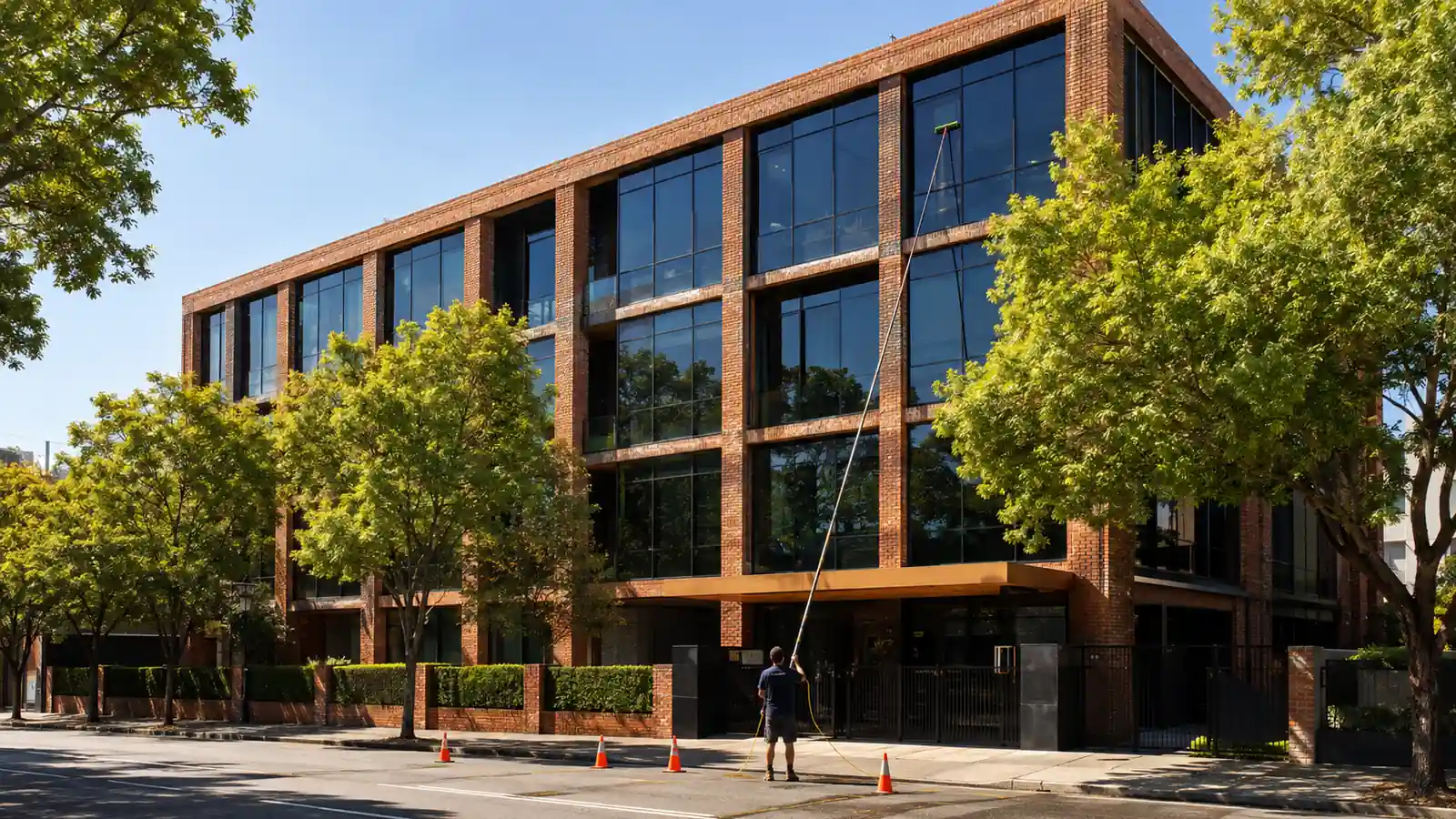 Podium and entry glass: pole work from the footpath, hand finished at eye level
Almost every tower job is a hybrid. The upper facade comes off the rope, the bottom few floors come off the pole, and the entry gets a hand finish because that is the glass people stand next to. Splitting those across two contractors is how buildings end up with a clean tower and a smeared front door.
Purified water does the work on the pole sections. With the minerals filtered out, it dries without leaving spots, so panels three and four floors up never need a cloth on them. At ground level we still finish by hand, because fingerprints, tape residue and door handles need contact to come off properly.
The other reason to keep it in one visit is the exclusion zone. It is already up for the rope work, the traffic is already managed, and the crew is already on site. Cleaning the base at the same time costs a fraction of what a separate mobilisation would.
What do we check about anchor points first?
That they exist, that they are the right type for the work, and that their inspection record is current. AS/NZS 1891.4 sets twelve months as the maximum interval between inspections of anchorages used this way, so a dated record should exist, and we read it before a rope is tied to anything.
This is the single most common reason a tower job stalls. A building changes hands, the facade maintenance file goes missing, and nobody has looked at the roof anchors in years. The glass still needs cleaning, so a contractor turns up, finds anchors with no paperwork, and either walks away or, worse, uses them anyway.
We would rather find out at quoting stage than on the morning. When you ask for a price we ask whether the anchor certification is current and who holds it. If it has lapsed, that is not a reason to lose the job, it is a reason to sequence it properly: the anchors get inspected and certified by a specialist, then we book the clean. We can tell you what is usually involved, though the inspection itself is not our trade and we do not pretend otherwise.
Where a building genuinely has no anchors and no cradle, rope is off the table entirely. In that case the options are a machine from the ground, working within whatever height it reaches, or installing an anchor system so the facade can be maintained properly from then on. We will quote what the building can actually take today and tell you plainly what it cannot.
"Have you sighted the anchor inspection record, and what date is on it?" A crew that cannot answer has either not looked or is planning to rig to anchors nobody has checked. Both answers should end the conversation.
How does Melbourne weather change the schedule?
Wind decides the day. Rope work stops when gusts make a technician or their equipment unstable against the facade, and between tall buildings the wind at height is stronger than the forecast at street level suggests.
We check the Bureau of Meteorology forecast the afternoon before and again on the morning, and the supervisor makes the call on site. The limit is written into the method statement for the building rather than decided on the day by whoever wants to get finished.
| Conditions | Rope work | Cradle work | What we do instead |
|---|---|---|---|
| Calm to light breeze | Runs as planned | Runs as planned | Full drops, longest days of the job |
| Fresh wind, gusty between towers | Often stops | Usually stops earlier than rope | Move to sheltered elevations or the podium |
| Rain without wind | Can continue | Can continue | Keep going; rain does not undo a clean pane |
| Storms or lightning | Stops | Stops | Everyone comes down, day is rebooked |
| Extreme heat | Early start, early finish | Early start, early finish | Glass is worked before the sun is on it |
Two things follow from this. Tower jobs get spare days built into the schedule rather than a single fixed date, and a day lost to wind does not change your price, because the quote is for the building, not for the hours. That is also why we avoid quoting towers by the hour: the weather risk should sit with the contractor who chose the method, not with the client who booked a clean facade.
Melbourne adds one more wrinkle. A clear still morning can turn into a hard northerly by eleven. Crews start early on tower work for exactly that reason, and the first elevation of the day is usually the most exposed one, so the sheltered faces are left as a fallback for the afternoon.
What compliance comes with a tower clean?
A safe work method statement written for your building, a rescue plan for the rope work, current insurance certificates, the crew's tickets, and an exclusion zone plan for the footpath. All of it arrives before the crew does.
Whoever manages or controls a workplace in Victoria keeps duties towards the contractors working on it. That is the whole reason the paperwork matters to you and not just to us: if something happens on your roof, the question will be what you checked before you let a crew up there.
The rescue plan is the part most people have never been asked about. Rope access technicians train to reach and lower a colleague who cannot descend under their own power, and the plan names who does that, with what equipment, from where. A contractor who talks about ropes but not about rescue has only thought through half the job.
Our summary of what a duty holder should expect to see, in plain terms, is on the window cleaning safety and compliance in Victoria guide.
- Site-specific SWMS naming the building, the method and the controls, not a template with your address typed in.
- Rescue plan for the descent, with the equipment listed and the responsible person named.
- Certificate of currency for public liability, sent up front rather than on request.
- Technician records showing the rope certification each person on your roof holds, through IRATA.
- Ground plan for the exclusion zone, spotter and any footpath management, agreed with you first.
What drives the price of a high rise clean?
The number of drops the facade needs, how long each one takes, and how much setup sits around them. Height matters less than shape: a tall plain tower can be quicker per pane than a short complicated one.
Think of the facade as a set of vertical strips. The wider the building, the more strips, and each strip is a separate rig, descent and reposition. A simple rectangular tower with clean elevations runs fast because the strips are uniform and the anchors line up above them. Put fins, sunshades, recesses or a stepped profile on the same building and every strip slows down, because the technician is working around obstacles instead of straight down glass.
Setup is the other half. Roof rigging, the exclusion zone at the base, tenant notices, inductions and pack-down happen whether the building is 12 storeys or 30. That fixed portion explains why a small tower rarely costs half what a large one does, and why a facade on a program pays less each visit than one booked from cold.
Frequency changes the picture again. Glass that has been left for years takes noticeably longer on the first pass, because mineral deposits and traffic film need working rather than washing. After that, a maintained facade cleans faster every time. The full breakdown of what moves a quote up or down sits on our commercial window cleaning cost page.
An hourly rate moves the weather risk onto you and rewards a slow crew. A fixed price for the facade keeps both with us, which is where they belong, because the assessment and the choice of method were both ours.
How do you get a quote for your tower?
Four things: the address, the number of storeys, whether there is a cradle or roof anchors, and anything unusual about the facade. Photos of the roof and the base help more than a long description.
We look at the building, work out the method, and send a fixed price with the inclusions, the exclusions and the documents listed. If the facade is complicated enough to need a closer look, we will say so and book a short assessment rather than guess. You can get a quote in about a minute, or read the overview of commercial window cleaning in Melbourne first.
- Most towers in the city grid are quoted from the address alone, including window cleaning Melbourne CBD buildings.
- Waterfront towers need wind planning, which is covered on window cleaning Docklands.
- The price holds for the facade, so a day lost to weather does not change it.
- Documents arrive before the crew, ready for your risk register.