
Commercial Window Cleaning in Port Melbourne
Three different jobs in one postcode: working industrial sites behind boom gates, new apartment and office towers along the water, and the Bay Street shops between them.
- Inductedbefore the first visit
- Yards sharedwith trucks and forklifts
- Salt airshortens the cycle near the water
Commercial window cleaning Port Melbourne sites need is the most varied brief of any precinct we cover, because the suburb is halfway through changing. Fishermans Bend still runs as working industrial land, with warehouses, distribution and light manufacturing behind fences. A few streets away there are new residential and commercial towers facing the water, and between the two sits Bay Street with its shops and cafes.
Those three need different crews, different equipment and different paperwork. An industrial site wants an inducted team that understands exclusion zones and forklift routes. A waterfront tower wants rope technicians and resident notice. Bay Street wants somebody there before the coffee machines are on.
What they share is the air. Everything within a few blocks of the bay collects salt, and salt-marked glass comes back faster than inland grime does. To see how this precinct sits against the other five, start at areas we serve across Melbourne.
What does commercial window cleaning Port Melbourne involve on an industrial site?
Completing your induction, signing in under your system, and working to an agreed exclusion zone while the site keeps operating. The glass itself is the quick part.
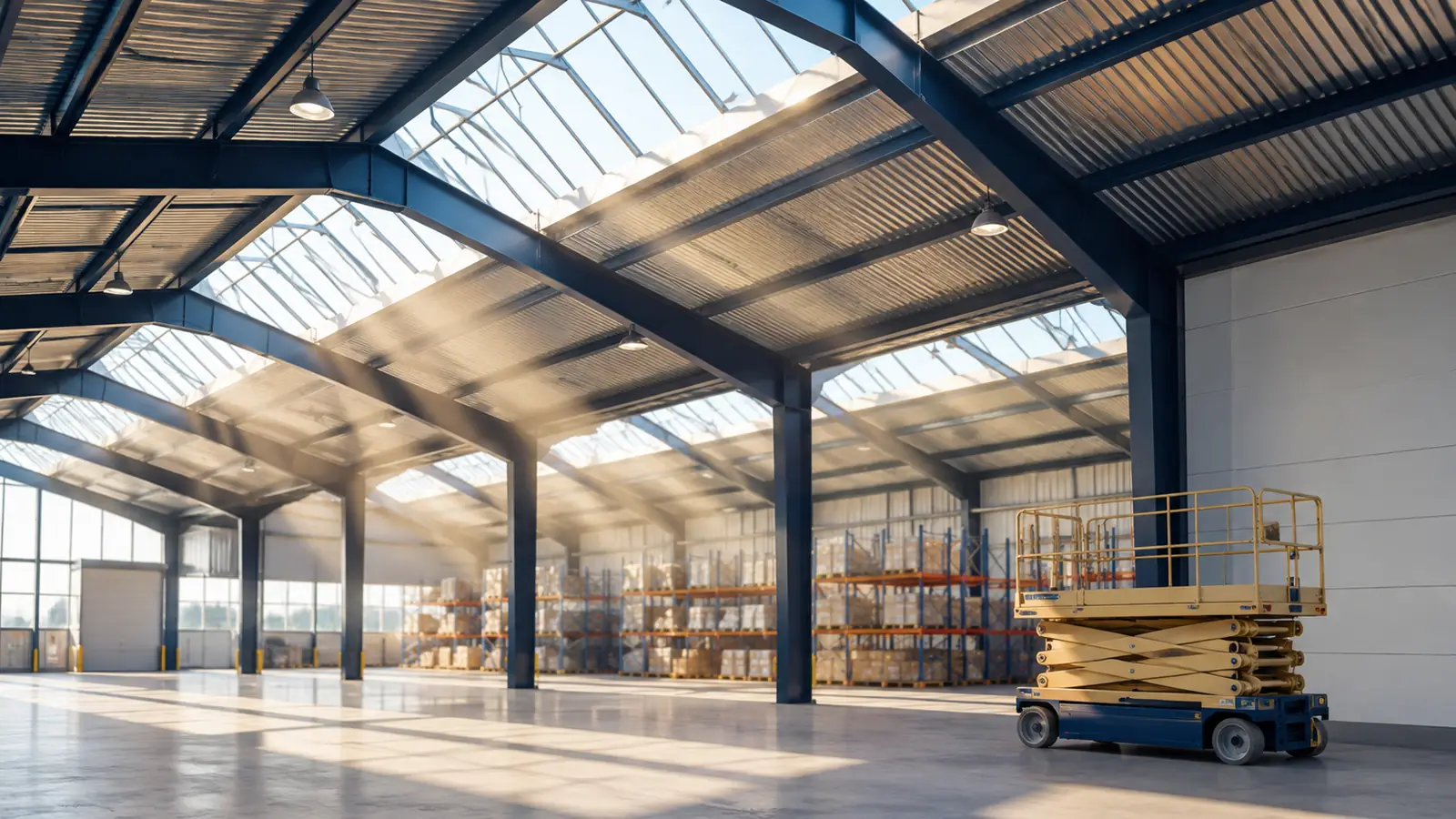
The Fishermans Bend stock is mostly single-storey warehousing with an office built onto the front. That front is what visitors see and it gets cleaned often. The high glazing inside the shed, and any roof lights above it, are a different job needing floor access for a lift and a quiet window in the operation.
Yards here are working yards. Trucks reverse into docks on a schedule, forklifts run fixed routes, and a window cleaner with a pole is an obstacle unless somebody has agreed in advance where we can stand and when. That conversation happens before the quote rather than on the morning.
None of it is difficult if the planning is done. What makes an industrial job go wrong is a crew that arrives expecting to work like they would on a suburban office, and finds a site that quite reasonably will not stop for them.
- Inductions done ahead of time, so nobody waits at the boom gate.
- Exclusion zones agreed with your supervisor, not assumed.
- Office fronts cleaned often, shed glazing far less.
- Roof lights quoted separately, because access differs entirely.
- Site method statement written for your yard, not a template.
The detail of how factory and warehouse work is planned, from shutdown timing to what a lift can and cannot reach between racking, is set out under factory and industrial window cleaning.
What about the towers along the water?
They are rope access buildings with a salt problem. Newer construction means designed roof anchors and clean edges, but the elevations facing the bay mark far faster than anything inland.
| Elevation | What lands on it | Effect on frequency |
|---|---|---|
| Facing the bay | Salt carried on wind, driven rain | Shortest cycle on the building |
| Facing the street | Road grit and exhaust film | Middle of the range |
| Sheltered rear | General dust only | Longest cycle, often half the front |
| Balcony glass | Salt plus everyday household marks | Matched to the bay elevation |
| Ground floor entry | Handprints, sand tracked in | Weekly regardless of the rest |
Salt is not just dirt that arrives faster. It leaves a fine haze that ordinary washing smears rather than lifts, and on glass left long enough it will start to etch the surface. Cleaning the exposed faces more often than the sheltered ones costs less than treating the whole building as one cycle, and it protects the glazing rather than just the appearance.
Where a tower has residents, the same notice and privacy arrangements apply here as anywhere else, and they are covered under strata and apartment window cleaning.
How does the retail strip get looked after?
On an early round, along the block in one pass, before the shops open. Bay Street works like any trading strip, and the shops that share a round pay less than the ones that book alone.
Cafes set the start time. Their frontages have to be finished before the first customers arrive, which in this part of Melbourne means early, and once a crew is on the street the rest of the block costs very little extra to include.
Sand is the local wrinkle. Bay Street runs down to the beach, and foot traffic carries grit onto the bottom rail of every shopfront along it, particularly in summer. That lower section needs proper washing rather than a quick pass, and it is the part a rushed job always misses.
Offices and professional suites above the shops are usually a separate arrangement with a different payer, done at the same visit where it makes sense.
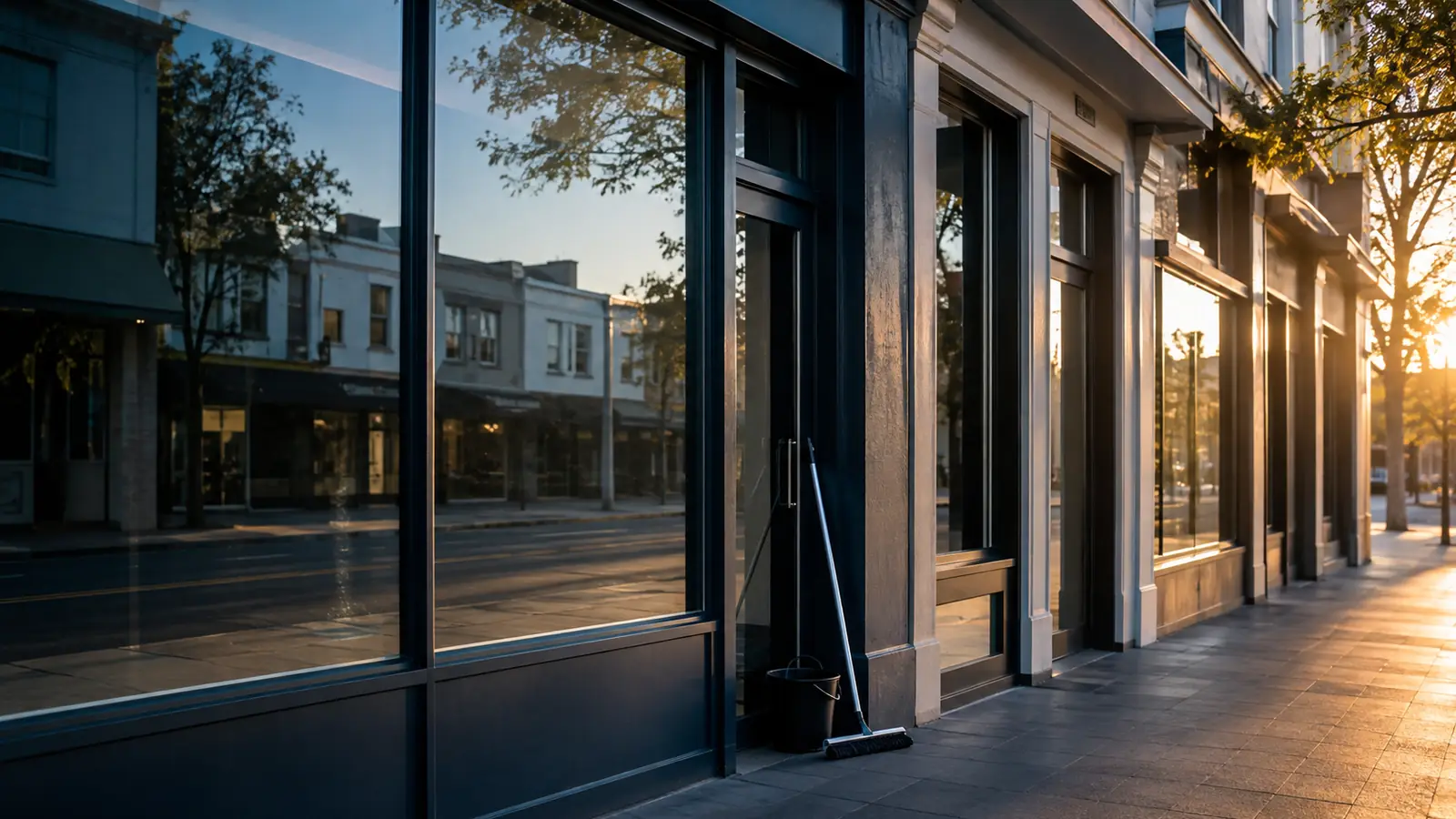 Sand off the beach sits on the bottom rail of every frontage here
What decides how a Port Melbourne job is run?
Whether the site is operating, and whether anything can stand in the yard. Industrial addresses usually have room for a machine, which makes them cheaper to reach than anywhere in the inner city.
Space is the one luxury this precinct has. Warehouse yards and hardstand areas take a scissor lift or a boom without any permit at all, because the land is private, and there is generally somewhere to park a truck without blocking anyone. That alone makes low-rise industrial glass some of the most affordable commercial work in Melbourne.
Operating hours replace permits as the constraint. A distribution site cannot pause its dock schedule, so the work fits around it: early, late, during a shift changeover, or in the quiet stretch between the last dispatch and the next run. A site that tells us its rhythm gets a cheaper quote than one that leaves us guessing.
Where a building is tall enough to need rope, the picture flips and it looks like any other waterfront tower: roof anchors, drop planning and wind. Both patterns exist within a few hundred metres of each other here.
Running several sites in the precinct on one schedule is common, particularly for operators with more than one unit in the same estate. That is arranged through scheduled window cleaning programs, with each address kept as its own line on the invoice.
How is a site here quoted?
Tell us which of the three you are: an operating site, a tower, or a shopfront. Each is priced a different way, and the answer changes what we need from you.
Industrial sites are worth a walk before quoting, because the yard decides everything. Send the address through get a quote, or read what moves the number on commercial window cleaning cost.
- Inductions and permits sorted ahead of the opening visit.
- Exposed elevations on a shorter cycle than sheltered ones.
- Several units in one estate on a single schedule.
- Your own plant used where it is available and inspected.