
Office Window Cleaning in Melbourne
Both faces of the glass, for towers in the grid and suites in the suburbs. The outside is reached by whichever method the height allows, from a pole at street level to a rope at the top. Inside covers partitions, meeting rooms, atriums and the entry, worked around your tenants rather than through them.
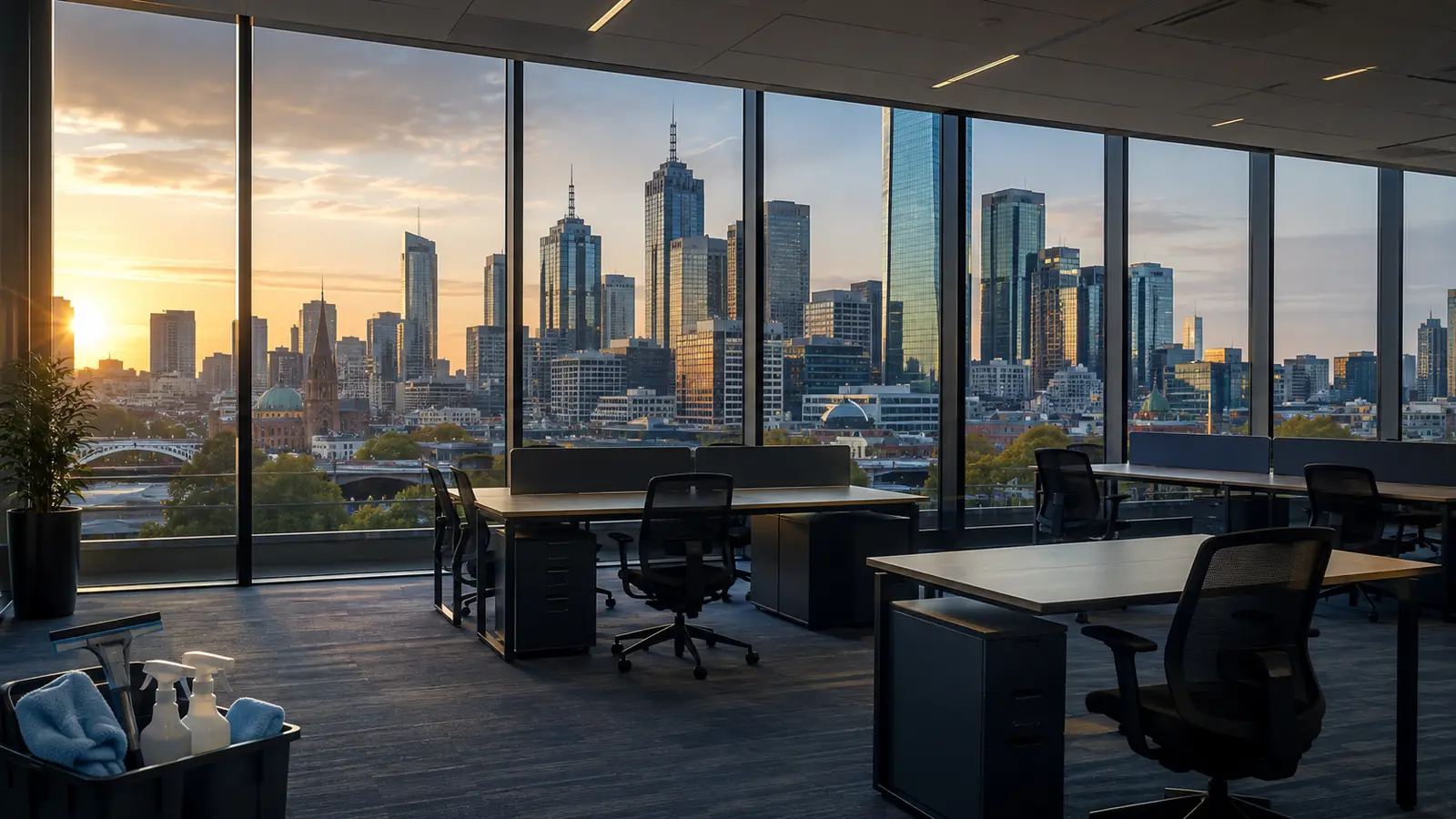
- In and outone booking
- After hoursas standard
- 24 hrsto a fixed price
- Partitions includedNot an optional extra
- Evenings and weekendsDesks stay where they are
- Inducted crewsSite rules followed, not argued
- One point of contactSame crew each visit
Office window cleaning in Melbourne is judged from two sides, and most contractors only think about one. From the street a tower is judged on its facade. From a desk on level nine, the same building is judged on the smear across the meeting room partition and the handprints on the lobby door. We quote both faces of the glass as one job, because that is how the people who work in the building experience it.
The instruction usually comes from a facility manager, an office manager or the commercial cleaning company that holds the daily contract and subcontracts the glass. Whoever it is, the brief is the same: get it done without moving desks, without interrupting meetings, and without anyone from our crew wandering through a secure floor unescorted.
We work on CBD towers, on the office spine along St Kilda Road, in the business parks out past the port, and in the suburban suites and converted warehouses in between. The method changes with height and the scope changes with the tenancy, but the routine around it stays the same. For the full range of building types, our window cleaning services page sets them side by side.
What does an office window cleaning scope actually cover?
The external facade, the inside face of every window, internal partitions and meeting room glass, atrium and stairwell glazing, balustrades, and the entry doors and surrounds. Anything glass, in other words, unless you tell us to leave it.
- External glassFacade panels, frames and sills, cleaned by the method the building height allows.
- Internal windowsThe inside face of every pane, plus sills and reveals, done after hours.
- Partitions and roomsGlass walls, meeting rooms, phone booths and internal doors, both sides.
- Entry and atriumDoors, handles, sidelights, balustrades and any glass people touch daily.
Two items are worth flagging because they get left out of cheap quotes. Sills and reveals collect the grit that runs off a pane the moment it rains, so cleaning the glass and skipping the sill guarantees streaks within a fortnight. And internal partitions in a busy tenancy pick up marks faster than the windows do, because people lean on them.
If your building is tall, the external half is a different trade to the internal half. That work is covered on our high rise window cleaning page, and it usually runs on a different frequency to the inside, which is why we set the two schedules separately and bring them together on one invoice.
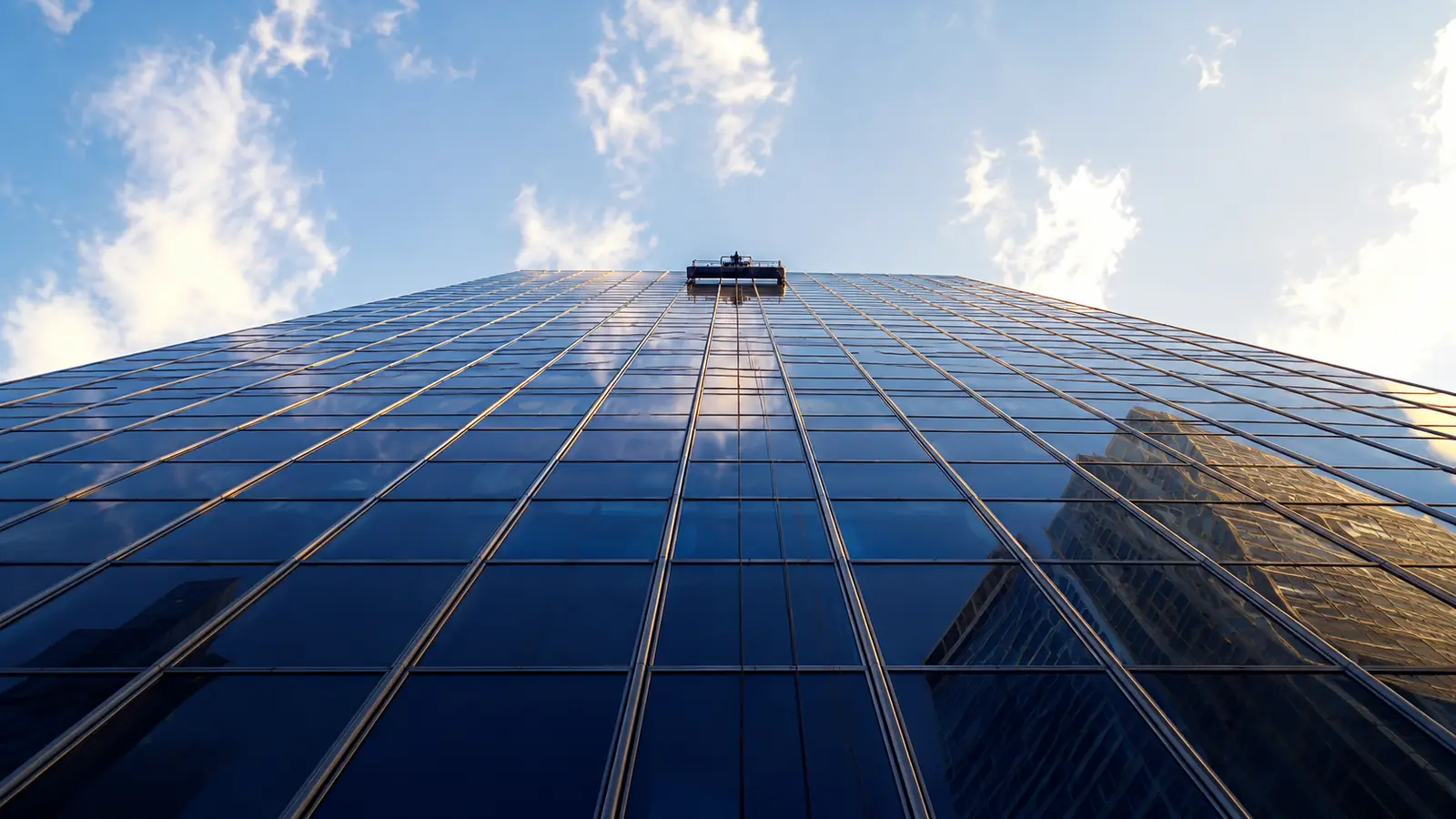 Tower work: facade on rope or cradle, podium and lobby from the ground, one visit
How are CBD office towers handled differently?
By splitting the building at podium level. Everything above comes off a rope or the building's cradle, everything below comes off a pole, and the interior runs on its own schedule after the floors empty.
Tower tenancies bring rules that suburban offices do not. Security passes, inductions, escorted access to certain floors, lift bookings for equipment, and a loading dock with a time slot. None of it is difficult, but all of it takes planning, and a crew that has not done it before will burn an hour of your morning working it out.
We hold the building's requirements on file after the first visit, so the second one starts at the dock rather than at reception. On a program that matters more than it sounds: the same technicians return, they know which lift takes the gear and which floors need an escort, and your facilities team stops being the tour guide.
Where a tower has its own maintenance cradle, we use it for the broad elevations and rope the rest. Where it has neither cradle nor anchors, the external work stops at whatever height a machine can reach from the street, and we will say so in the quote rather than discovering it on the day.
What about business parks and suburban suites?
Almost all of it is pole work from the ground. Purified water on a carbon pole reaches the top of most two to six storey offices, which covers the majority of Melbourne's suburban stock without anyone leaving the footpath.
This is the quiet half of the market and the half that gets neglected. A business park tenancy often has its windows cleaned once when the lease starts and then never again, because nobody is quite sure whose job it is: the landlord, the tenant, or the cleaning company that does the carpets.
The practical answer is that whoever cares about the first impression should book it. Ground floor suites are judged at arm's length by everyone walking in. Glass at that distance shows every mark, which is why we finish the lower panes and the entry by hand even when the rest of the elevation is done from a pole.
Car parks, garden beds and awnings are the usual obstacles, and none of them stop pole work. What does stop it is a deep setback or a courtyard with no line of sight to the glass, and those sections get a platform instead. It is the same approach we take on building and facade window cleaning, applied to a tenancy rather than a whole building.
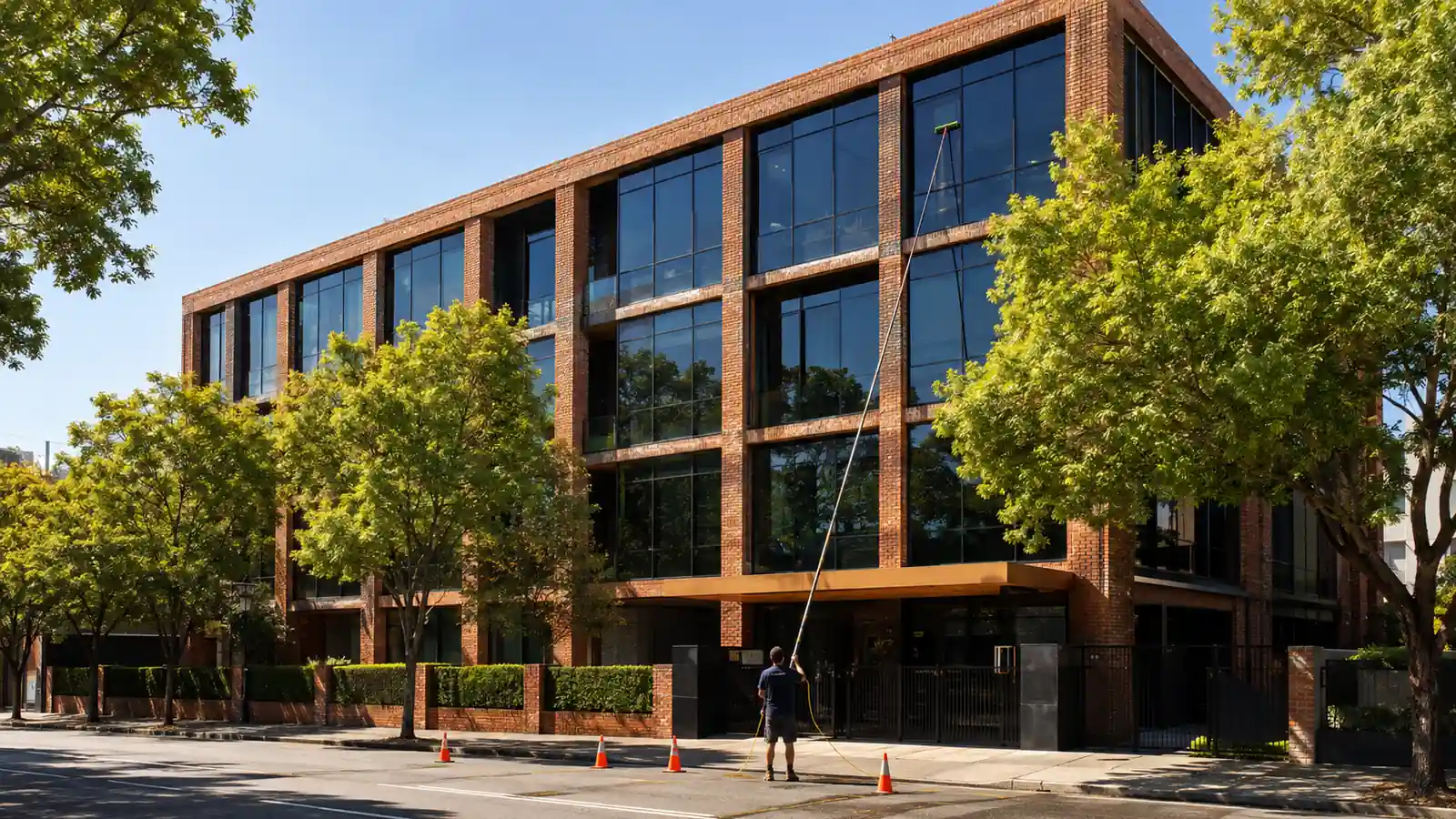 Business parks: purified water from the ground, hand finish at entry level
How is internal glass cleaned around a working floor?
Outside working hours, in a set order, with nothing moved that cannot be put back. Partitions and meeting rooms first, then windows and sills, then the entry and atrium on the way out.
Internal work is detail work. There is no pole and no rope, just cloths, a squeegee and a ladder-free reach tool for the high panes above a stairwell or in an atrium. Where glass sits above a void or a feature staircase, the job needs an access plan of its own, and on a few buildings that means a platform brought inside on a weekend.
The rules we work to on a live floor are simple. Desks stay where they are. Papers, keyboards and screens are not moved. Anything we shift to reach a pane, a plant or a low cabinet, goes back where it was. And if a room is locked or occupied, it gets skipped and noted rather than opened.
Atrium and stairwell glass deserves its own mention, because it is the glass everyone sees and nobody can reach. A void three floors deep needs either a pole with a long reach from the landing, a platform brought inside, or rope from an anchor at the top. We work out which at the quoting stage and tell you if it needs its own visit, rather than leaving a ring of dirty glass above head height and calling the floor finished.
Security comes up on almost every tower tenancy. Crews sign in, wear identification, and work escorted where the floor requires it. For legal, medical and government tenancies we agree in advance which rooms are out of scope entirely, and the close-out note says which ones were not entered.
- Both faces of every partition, not just the side facing the corridor.
- Handles and push plates, which is where the marks actually are.
- Sills and reveals wiped so the next rain does not streak the pane.
- Balustrades on stairs and voids, both sides, including the underside rail.
- A note of anything skipped, so nobody has to guess what was reached.
When does the work actually happen?
Interior glass is almost always after hours or on a weekend. External work runs during the day, because rope and platform work needs light and a managed zone below, and it disturbs nobody inside.
Reception areas are the exception that proves the rule. The entry doors, the sidelights and the glass behind the front desk are handled during business hours on most buildings, because a smeared door at nine in the morning undoes whatever the rest of the floor looks like. It takes minutes, needs no access to desks, and is usually the single most visible part of the whole job.
That split surprises people who assume the whole job has to be out of hours. It does not. A technician outside your window at eleven in the morning is quieter than a vacuum cleaner and does not need access to a single desk. The part that needs the floor empty is the inside work, and that is the part we schedule around you.
For most offices that means an evening start after the last staff leave, or a Saturday morning for larger floors. Buildings with twenty-four hour tenants, trading floors or medical suites get a different arrangement again, usually a weekend so there is no overlap at all. We agree the window before the booking is confirmed rather than assuming.
There is a reason we push for consistency in the slot. Cleaning glass at night in an empty office is quick, but the first visit in any building is always the slow one: finding the water point, learning which doors lock behind you, working out where the bin room is. Once that is known, the same floor takes noticeably less time, and the price on a program reflects it.
Two practical things make the night run smoothly. Lighting needs to stay on in the areas being cleaned, which sounds obvious until a timer kills the floor at ten. And security needs to know a crew is booked, or the first alarm call of the night will be yours. Both get confirmed in writing with the booking.
Outside and inside rarely need the same frequency. A common arrangement is quarterly on the facade with the interior added to every second visit, so the glass people touch gets attention twice as often as the glass they only look through.
How often should an office clean its glass?
Quarterly suits most offices. Premium towers and client-facing lobbies usually go monthly, suburban suites can stretch to twice a year, and anything beside a construction site needs attention sooner than the calendar says.
| Building | External glass | Internal glass | What drives it |
|---|---|---|---|
| Premium CBD tower | Quarterly | Monthly to quarterly | Lobby presentation and tenant expectations |
| Standard office tower | Two to four times a year | Quarterly | Traffic film at street level, salt higher up |
| Business park suite | Quarterly to twice a year | Twice a year | Dust, car park grit, garden irrigation |
| Converted warehouse office | Twice a year | Twice a year | Older frames, higher glass, less exposure |
| Anything near works | As needed | As needed | Construction dust bonds fast and needs earlier attention |
There is a simple test if the table does not settle it. Stand at the main entrance on a bright morning and look back through the glass at eye level. If the film registers before the view does, the interval is too long for that building. Most managers know the answer already and are really asking whether it can wait another quarter.
Exposure beats grade every time. A mid-tier building on a quiet street stays clean longer than a premium tower on a tram route, and a bayside office carries salt that a city one never sees. We look at where the building actually sits before recommending an interval, which is the same logic set out in our guide to how often commercial windows should be cleaned.
Is a program cheaper than booking each time?
Per visit, yes. Dates set a year ahead let us plan crews and access efficiently, the rate holds for the term, and a maintained facade cleans faster every visit than one left to build up.
Owners and tenants often split the two halves of the work, which complicates the calendar more than the cleaning. Where a landlord holds the facade and the tenant holds the interior, we keep the schedules separate and invoice each party for their own scope, so neither pays for the other. It is a common arrangement in multi-tenant buildings and causes no trouble at our end.
The other saving is administrative, and facility managers feel it more than the invoice. No chasing quotes each season, no re-explaining the induction, no negotiating access again. The visits appear on the calendar, the crew turns up, and a short note lands afterwards confirming what was done. How those rounds are structured is on our scheduled window cleaning programs page.
Frequency also protects the fit-out. Film and grime on internal partitions get cleaned off easily for the first year or two, but left alone they need stronger treatment, and on coated or printed glass that is a risk nobody wants to take. Keeping the interval sensible is cheaper than restoring a surface that has been neglected for five years.
Cost on an office job comes from four things: the height and access method for the outside, the glass area inside, how detailed the internal fit-out is, and the hours we are allowed to work. A floor of open plan with a few meeting rooms is quick. The same floor divided into forty glass offices takes far longer, because every partition has two faces and a door.
After-hours work carries its own premium in most of the industry, and we price it honestly rather than hiding it in a rate. If your building can allow a Saturday morning instead of a weeknight, that usually costs less. Everything that moves the figure is itemised on the commercial window cleaning cost page.
How do you price an office job?
Tell us the address, the number of floors in your tenancy, roughly how much internal glass there is, and what hours we would be allowed on site. That is enough for a written fixed price within a day.
A floor plan helps more than a description if you have one, because internal partitions are what move the number. Otherwise a rough count of meeting rooms and glass offices is plenty. When you are ready, get a quote, or read the whole picture on commercial window cleaning in Melbourne first.
- Inside and outside quoted together, invoiced once.
- After-hours rates stated plainly, not buried.
- City buildings covered from the grid outwards: see window cleaning Melbourne CBD.
- Office spine and set-back towers: see window cleaning St Kilda Road.