
Strata and Apartment Building Window Cleaning
Quotes an owners corporation can approve in one meeting, work that residents are told about before it happens, and a crew that understands the difference between common property and somebody's living room.
- OC readyitemised quotes
- Noticeswritten for you
- Privacyprotocol agreed
Apartment building window cleaning has two audiences and they want different things. The committee wants a number it can approve without a second meeting. The residents want to know when somebody will be outside their bedroom window. Get either one wrong and the job becomes an agenda item rather than a line in the maintenance budget.
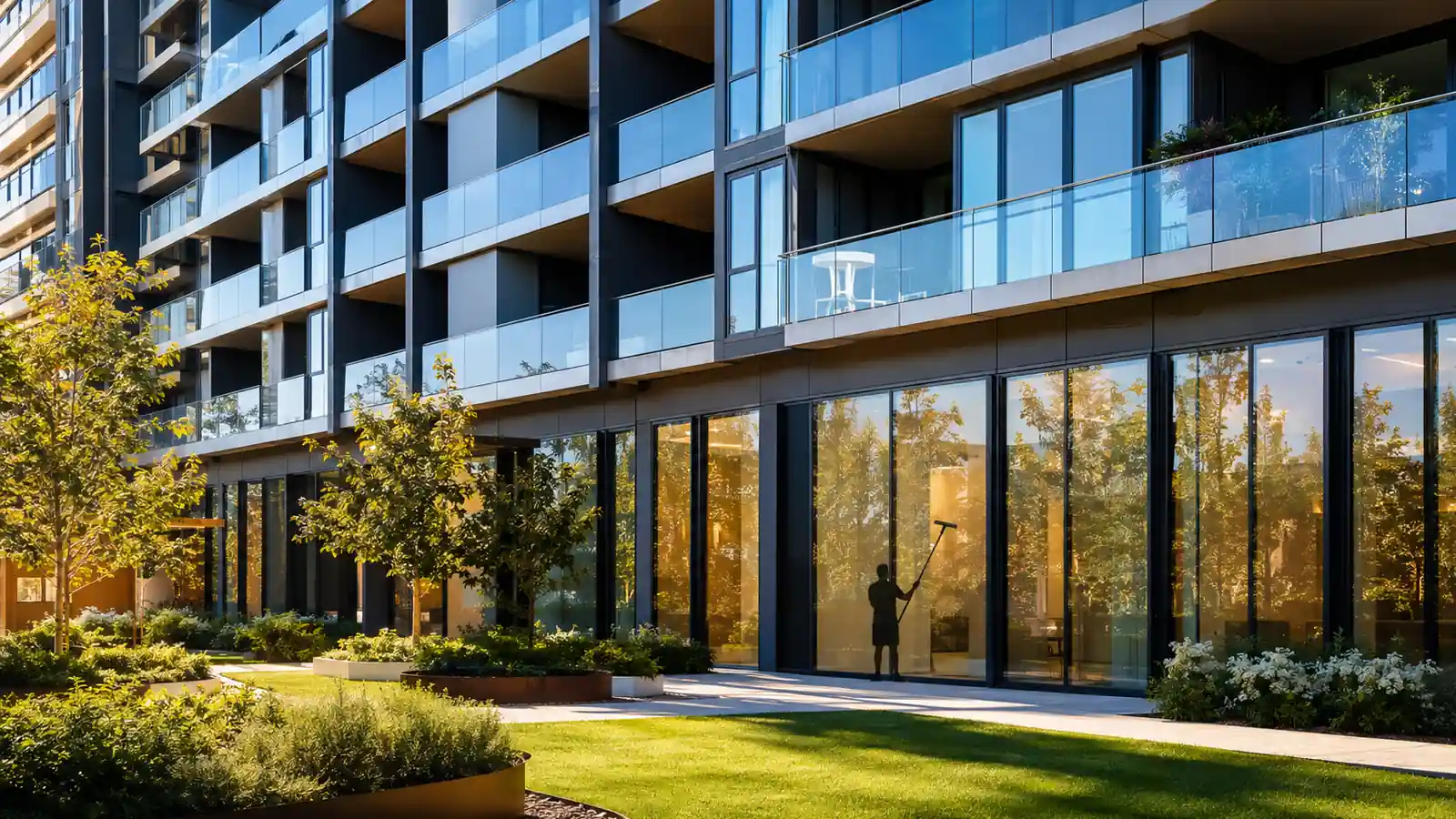
We work for owners corporations, strata managers and building managers across Melbourne, on everything from four-unit walk-ups to residential towers on the river. The access method follows the building, as always: rope on the tall ones, a pole on the low ones, and a platform where a courtyard or a podium gets in the way.
What changes on a strata job is everything around the cleaning. Scope has to be defined precisely, because the line between common property and private lot decides who pays. Notice has to go out. Privacy has to be handled properly. If you want to compare this with the other building types first, they sit side by side on our window cleaning services page.
Common property glass, or the whole facade?
Two scopes, and the committee picks one. Common property only covers lobbies, corridors, stairwells and shared doors. A full facade clean adds the outside of every lot window and the balcony balustrades.
| Scope | Included | Not included | Typical frequency |
|---|---|---|---|
| Common property only | Lobby and entry glass, corridor windows, stairwells, shared doors, letterbox area | Anything on a private lot, inside or out | Quarterly to twice a year |
| Full facade | All of the above plus the outside of every lot window and the balustrades | The inside of lot windows | Once or twice a year |
| Full facade plus interiors | Everything, with interior access arranged lot by lot | Lots that decline access | Rare, usually pre-sale |
Most buildings land on the middle option. The outside of a lot window is usually the owners corporation's problem even though the window belongs to the lot, because no individual owner can safely reach it and the building looks striped if half the residents organise their own. The inside stays with the occupant, which keeps the scope clean and the cost predictable.
One scope question comes up in nearly every building: what happens to the glass a resident could reach themselves, such as a ground floor courtyard window. Committees usually leave those out, since the occupant can clean them, and that keeps the common cost down. We will price them either way, but the default is to exclude anything a person can safely reach from their own floor.
Whatever is chosen, the quote lists it explicitly rather than saying "windows". Committees change, managers change, and a scope written down three years ago is the only thing that settles an argument about what was supposed to be included.
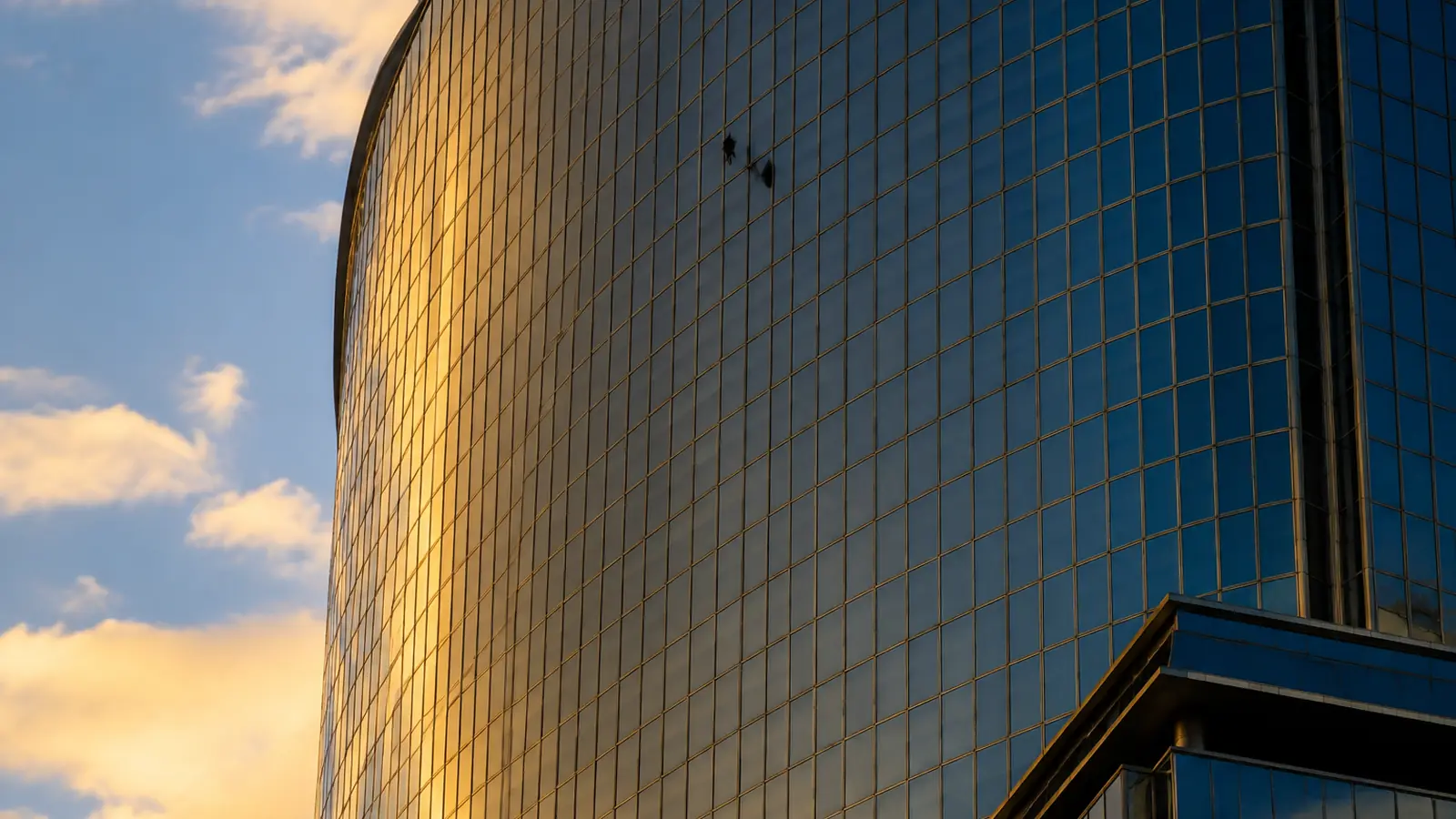 Occupied towers: notice first, blinds down where residents want privacy, no lingering
How is privacy handled on a residential tower?
With notice, a protocol and a technician who keeps moving. Residents are told which elevations and which days, asked to shut their windows and pull the blinds across if they would rather not be seen, and the crew keeps moving rather than pausing at any pane.
Residential rope work is different to commercial rope work in exactly one respect, and it is not technical. A person may be in the room. The rule we work to is simple: a technician does not stop at an occupied window, does not photograph anything but their own work, and does not use a window as a mirror to check their rigging.
The notice does the heavy lifting. Sent through the manager several days ahead, it tells residents the dates, the elevations and roughly what time of day their level will be reached. Most people simply close the blind that morning and forget about it. Without notice, the same visit generates complaints and sometimes a call to the police.
Balconies add a practical wrinkle. Technicians pass very close to them, so plants, drying racks and furniture near the edge are worth moving in. That goes in the notice too. The technique behind it is set out under rope access window cleaning.
What about townhouses and walk-up blocks?
Pole work from the ground, which covers almost every complex under about six storeys. No ropes, no machines and no access needed into anyone's courtyard in most cases.
Walk-up blocks and townhouse complexes are the quiet majority of Melbourne strata. They rarely have a maintenance budget line for glass, so the windows get cleaned when a new manager takes over or when somebody complains. A twice-yearly round on a small complex costs less than most committees expect, largely because the crew is in and out in a morning.
The complication on these sites is not height, it is layout. Garden beds, fences, private courtyards and parked cars decide where a pole can stand. Where a section is genuinely unreachable from common property without entering a lot, we say so in the quote and leave it out rather than assuming a resident will be home to let us through.
It is ordinary pole work, the kind covered under building and facade window cleaning, carried out on a residential site with rather more gates in the way.
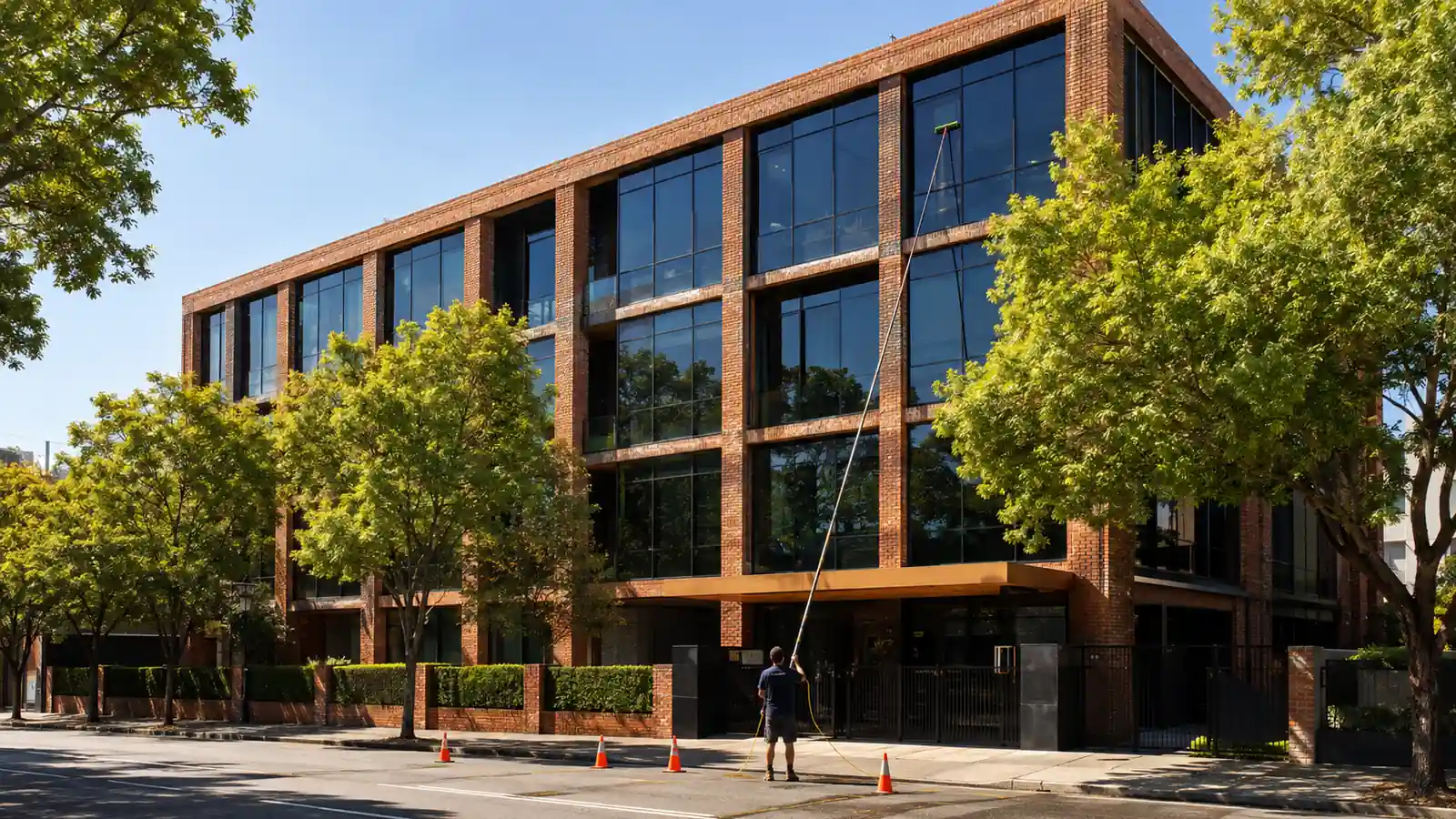 Walk-ups and townhouses: pole work from common property, gates and gardens permitting
What does a committee need to approve apartment building window cleaning?
An itemised quote, a current certificate of currency, and a method statement for the access being used. Those three documents answer almost every question a committee raises before a vote.
Strata quoting fails for procedural reasons far more often than price ones. The quote says "window cleaning" with a single number, so nobody can tell whether balustrades are in. Or the insurance certificate has expired. Or there is no method statement, so the manager cannot show the committee how people will get to the fifteenth floor. Each of those sends the decision to the next meeting.
We write quotes the way a manager needs to present them: scope by area, the access method named, the documents attached, and a validity period long enough to survive a two-month meeting cycle. Where a committee wants options, we price common property and full facade separately so the meeting can choose rather than re-quote.
For buildings that want the work spread across the year rather than billed in one hit, the visits can be staged, which is set out under scheduled window cleaning programs.
- Itemised by area, so the committee sees what each part costs.
- Certificate of currency attached, not promised on request.
- Method statement naming the access, so the manager can show how it will be done.
- Resident notice drafted and ready to circulate once dates are set.
- Validity that survives the gap between meetings.
What moves the price on a strata building?
Height, the number of lots with external glass, and how much of the facade is blocked by balconies. Scope is the other half: common property only is a fraction of a full facade clean.
Balconies are the single biggest variable on a residential tower. A flat curtain wall lets a technician run a clean vertical strip. The same tower with projecting balconies means working around each one, which can double the time on the same elevation. Two buildings of identical height can therefore sit a long way apart on price.
Access to the roof is the other thing that decides a tower price. A building with certified anchors and a clear path to them is straightforward. A building where the anchors have never been inspected, or where the only roof hatch runs through a lot, adds time before anybody starts cleaning. Both are worth checking before the committee sees a number, not after.
Frequency helps here more than on most building types, because residential glass gets marked by rain, salt and dust rather than by traffic film. Twice a year keeps most Melbourne towers presentable, and buildings near the bay sometimes want three. A facade left for five years needs a much slower first pass, which is worth knowing before a committee compares this year's quote with the one in the old minutes.
Where a building is part of a larger managed portfolio, grouping it with nearby sites reduces travel and mobilisation. Each of those factors is explained under commercial window cleaning cost.
How do you get a quote for the building?
Send the address, the number of levels and whether the committee wants common property only or the full facade. If you are not sure, ask for both and let the meeting decide.
We return a written quote with the scope itemised, the access method named and the documents attached, ready to put in a meeting pack. Send the details whenever the committee is ready and get a quote, or start from the overview of commercial window cleaning in Melbourne.
- Two scopes priced separately so the committee can choose.
- Insurance and method statement in the same email as the price.
- Resident notice written for you, not left to the manager.
- Quote stays valid long enough to reach the next meeting.