
Commercial Window Cleaning in South Melbourne
Showrooms, converted warehouses, low-rise offices and the Clarendon Street shops. Almost all of it is reachable from the footpath, which makes this the quickest precinct we work and the fussiest to park in.
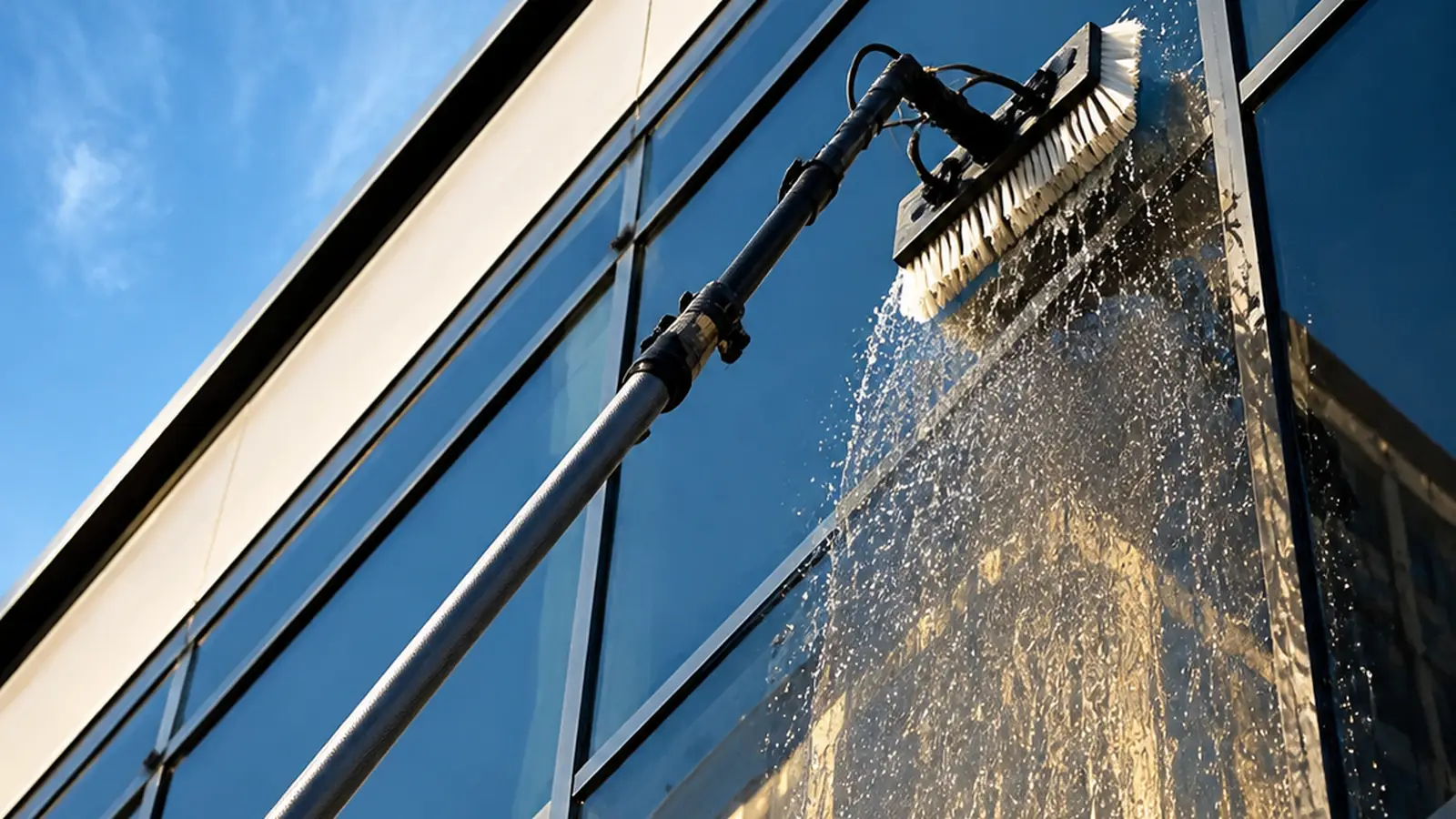
- Pole workcovers most of the precinct
- Parkingdecides the hour we come
- Showroomsinside and out together
Commercial window cleaning South Melbourne businesses need is rarely a height problem. The precinct runs low: three to five storey offices, converted warehouses with big industrial windows, design and furniture showrooms with glazing five or six metres tall, and the retail strip along Clarendon Street. Nearly all of it can be washed from footpath level on a water-fed pole.
That changes the economics completely. There is no rigging, no machine hire, no permit and no roof inspection, so the cost sits almost entirely in time on site, and a building that would be a serious exercise in the city becomes a straightforward morning here.
What replaces access as the constraint is the street. Narrow roads, permit zones, loading restrictions and a strip that is busy from breakfast onwards all decide when we can be somewhere. For how the precincts compare, see areas we serve across Melbourne.
What kind of premises does commercial window cleaning South Melbourne usually cover?
Showrooms and design studios, low-rise and converted offices, medical and allied health rooms, and the Clarendon Street retail strip. Very little of it goes above five levels.
The showrooms set the tone. Furniture, lighting, kitchen and bathroom displays all sell through glass, and their frontages are often a single storey of uninterrupted glazing several metres high. On those buildings the inner face carries as much weight as the outer one, since a customer stands with their nose almost against it.
The warehouse conversions are the most interesting glass in the precinct. Original steel-framed industrial windows, often painted many times, sometimes with a hundred small panes in one opening. They take far longer than their area suggests and they are worth every minute, because they are the reason the building looks the way it does.
Then there is the strip. Clarendon Street runs cafes, specialty retail and professional offices above them, and that frontage is judged every morning by people walking to the market. It goes on a weekly or fortnightly round like any retail street.
- Showrooms, tall frontages done inside and out together.
- Warehouse conversions, with steel-framed windows that take real time.
- Low-rise offices, three to five levels, pole from the footpath.
- Clarendon Street retail, on a weekly or fortnightly round.
- Allied health rooms, where waiting room glass is read as hygiene.
Why does pole work suit this precinct?
Because the buildings are low enough to reach and the streets are too tight for machines. A water-fed pole gets to about eight metres from the footpath with no permit, no set-up and nothing standing in a traffic lane.
The technique is different from what most people picture. Purified water is fed up a carbon fibre pole to a brush at the top, the glass is scrubbed and then flooded, and it is left to dry without being squeegeed. Because the water has no dissolved minerals in it, there is nothing left behind to dry as a spot.
That matters here more than elsewhere because showroom glass is enormous and often awkward to reach the traditional way. A single pane four metres high can be washed from the ground in minutes, where a ladder would be both slower and, on a footpath, genuinely unsafe.
Where the pole stops is where the job changes. Above roughly eight metres the pole gets hard to control and the finish suffers, so a taller building goes on a machine or rope instead. On this precinct that is the exception rather than the rule.
 Pole above, hand below: the bottom metre is where marks actually show
What do businesses here generally book?
Showrooms fortnightly to monthly inside and out, offices monthly on the interior with the exterior quarterly, and shopfronts on the strip weekly. Almost nobody here buys an annual clean.
| Premises | Usual round | What drives it |
|---|---|---|
| Furniture or design showroom | Fortnightly to monthly | Stock sells through the glass, both faces matter |
| Converted warehouse office | Quarterly outside, monthly inside | Steel frames take time, interiors are hand height |
| Clarendon Street shopfront | Weekly to fortnightly | Grit off the road and marks left at door height |
| Allied health rooms | Monthly | Waiting area glass read as a hygiene signal |
| Low-rise office building | Two to four times a year outside | Cheap to reach, so more often than a tower |
The showroom pattern is worth explaining because it surprises people. Inside and out on the same visit sounds like double the work, and on a normal office it would be. On a showroom the inside is at eye level, uninterrupted, and takes a fraction of the time, so adding it usually costs less than clients expect and makes far more difference to how the space reads.
Shops along the strip do best on a shared round, because the travel is split between neighbours and each frontage takes minutes. Why a street booked together is cheaper per shop than any of them booked alone is explained under retail and shopfront window cleaning.
What makes the timing tricky here?
Parking, almost entirely. The streets are narrow, much of the kerb is permit zone or paid parking, and a pole system runs off a van that has to be within reach of the building.
A pole is fed from a tank in the vehicle, so the van cannot simply be left three streets away. On a wide suburban road that is nothing. On the tighter streets around Coventry and Park, where every metre of kerb is spoken for, it decides what time of day the job is possible at all.
Early mornings solve most of it. Before about eight the loading zones are usable, the ticketed bays are empty and the footpaths are clear, which suits the retail strip anyway because the work has to finish before trade. Most of our South Melbourne round runs between six and nine.
Market days change the picture around the South Melbourne Market end of the precinct, where traffic and foot volume jump. We schedule around them rather than attempting the same streets on the same morning.
None of this is a reason for a job to slip. It is a reason to book a standing slot rather than calling when the glass looks bad, and in a precinct this compact a fixed weekly time is worth more than it sounds. That is what scheduled window cleaning programs are for.
How quickly can you quote a premises here?
Same day for most of this precinct. Low buildings reachable from the footpath can be priced from an address and a photo, with no site visit needed.
Say whether the inside is wanted too, because on a showroom that answer moves the number further than the floor area does. Send it through get a quote, or work through the logic first under commercial window cleaning cost.
- No permits or machine hire on most addresses here.
- Early slots so the van can park near your building.
- Inside and out quoted together on showroom glass.
- Neighbouring shops offered the same round to share the travel.