
Scheduled Window Cleaning Programs and Contracts
A calendar instead of a phone call. Locked rates, the same crew each visit, a photo record of what the glass looked like, and a number that answers when something happens between visits.

- Lockedrate for the term
- Same crewevery visit
- Photo recordafter each clean
Regular commercial window cleaning is what most buildings actually need, and almost none of them start with it. The first call is nearly always reactive: a tenant complained, an inspection is coming, or someone finally looked up. A program turns that into a date in the calendar, at a price agreed in advance, without anyone having to notice the glass first.
We run programs for office buildings, strata committees, retail groups, medical suites and industrial sites across Melbourne, from single buildings to portfolios spread across the metropolitan area. The structure is the same in every case. Agreed frequency, fixed price per visit, the same technicians, and a short report after each one so you have a record without chasing anybody for it.
What changes between clients is the rhythm, because a Collins Street tower and a suburban medical centre do not need the same attention. Which building types suit which schedule is covered further down, and the individual jobs a program can contain are listed under window cleaning services.
Why do buildings move to a scheduled window cleaning program?
Because ad hoc cleaning costs more and looks worse. Regular commercial window cleaning locks the rate, guarantees the slot, and keeps the same crew on the building, so nothing is renegotiated or re-explained every time.
The money argument is the simplest one. Glass cleaned on a schedule needs a wash and a finish. Glass left for a year needs the marks worked off, the frames cleared and the sills done before it looks like anything, which is why a neglected first clean is always the most expensive visit a building ever buys.
Then there is availability. Rope access crews and boom bookings in the CBD get tight around the end of the financial year and before Christmas, which is exactly when facility managers remember the windows. A building on a program already holds its slot, so it is not competing for one.
Consistency is worth something on its own. A building whose glass is always roughly the same standard never has a bad month, and nobody in the tenancy ever has a reason to send a photo to the managing agent. Buildings cleaned reactively swing between very good and embarrassing, and the complaints arrive at the bottom of that swing rather than the top.
The quiet benefit is familiarity. A crew that has cleaned your building four times knows which anchors are usable, which tenant hates noise before ten, where the water point is and which windows the previous cleaner never reached. None of that is written on a job sheet, and all of it saves time.
- Rate locked for the agreed term, so budgets hold.
- Slot reserved before the busy months close it.
- Same technicians, who already know the building.
- No approval cycle for every clean, only for changes.
- Cheaper per visit than the same clean booked cold.
How do you choose the right frequency?
Start with what the building is for, then adjust for its exposure. A street-level shopfront and a sealed tower thirty storeys up sit at opposite ends, and most buildings land somewhere in the quarterly to monthly range.
| Building | Typical program | Why |
|---|---|---|
| CBD office tower, exterior | Two to four times a year | Access cost dominates, glass is sealed and high |
| Office interiors and atrium | Monthly to quarterly | Hand marks, partitions and entry glass at eye level |
| Strata apartment building | Twice a year, common areas more often | Committee budget cycles and lobby traffic |
| Retail shopfront | Weekly to fortnightly | Street dust and handprints, glass is the product |
| Medical and consulting suites | Monthly | Waiting room glass is read as a hygiene signal |
| Factory or warehouse | Annually, office front monthly | Shutdown access for the high glass, daily use at the front |
Melbourne weather pushes those numbers around more than most cities. A building on a tram route collects brake dust. One near the bay carries salt. A tower facing north into the afternoon sun bakes whatever lands on it, so marks bond harder than they would on the shaded side, and the two faces of the same building can look a season apart.
We would rather start conservative and add visits than sell a schedule you do not need. After two or three cleans the right interval is obvious from the condition photos, and we say so even when it means fewer visits. Every interval above is argued out properly, building type by building type, in the guide on how often commercial windows should be cleaned.
What does every program include?
A fixed scope per visit, a photo condition report afterwards, notes on anything we found, priority for call-outs between visits, and one person you deal with rather than a different office each time.
- Fixed scopeWhat is cleaned, what is excluded and which elevations are covered, written once and applied to every visit.
- Photo condition reportImages after each clean, plus anything worth flagging: failed seals, cracked panes, blocked drainage, damaged anchors.
- Priority responseProgram buildings go to the front of the queue when something needs attention before the next scheduled visit.
- One contactThe same coordinator for scheduling, invoicing and questions, who knows the building without looking it up.
The condition report is the part clients come to rely on. A window cleaner is on every face of your building several times a year, closer to the facade than anyone else goes, and that is a genuinely useful inspection if somebody writes it down. Perished seals and failing gaskets show up years before they leak, and a photo with a date on it is what gets them into a maintenance budget.
It also settles arguments. When a tenant says the windows were missed, or an incoming owner asks what condition the facade is in, the answer is a dated set of images rather than two people remembering differently. That record has closed more of those conversations for our clients than any amount of explaining ever did.
Reporting stays short on purpose. Nobody reads a forty page document about window cleaning. What lands is a handful of images, a line about anything unusual, and a note of any elevation we could not complete and why, which matters most on high rise work where wind stops a day without warning.
What happens after hours or in an emergency?
Program buildings get priority for both. Evening and weekend work is available where a building cannot have crews on site during trade, and unscheduled call-outs are fitted in ahead of general bookings.
After-hours work is normal for some building types rather than exceptional. Trading floors, medical rooms and retail interiors are all easier to clean when nobody is in them, and a tower with restricted lift access often has no realistic option other than an evening window.
It costs more per visit, and that sits on the quote from the beginning rather than appearing later. What it buys is a building where the work is invisible: tenants arrive to clean glass and never see a pole, a barrier or a wet floor sign.
Night work on a tower also changes the access equation. Streets that cannot be closed during business hours are available after seven, loading zones open up, and a boom can be set where it would never fit at midday. Some buildings that look like rope access jobs on paper turn out to be straightforward once the work moves to an evening.
Between scheduled visits, things happen. A storm coats one elevation in grit. A neighbouring site renders a wall and overspray lands on your windows. A tenant hosts an event and wants the entry immaculate on a Thursday rather than the following Tuesday. Program buildings get those slotted in first, at the same rates, because the scope and access are already agreed.
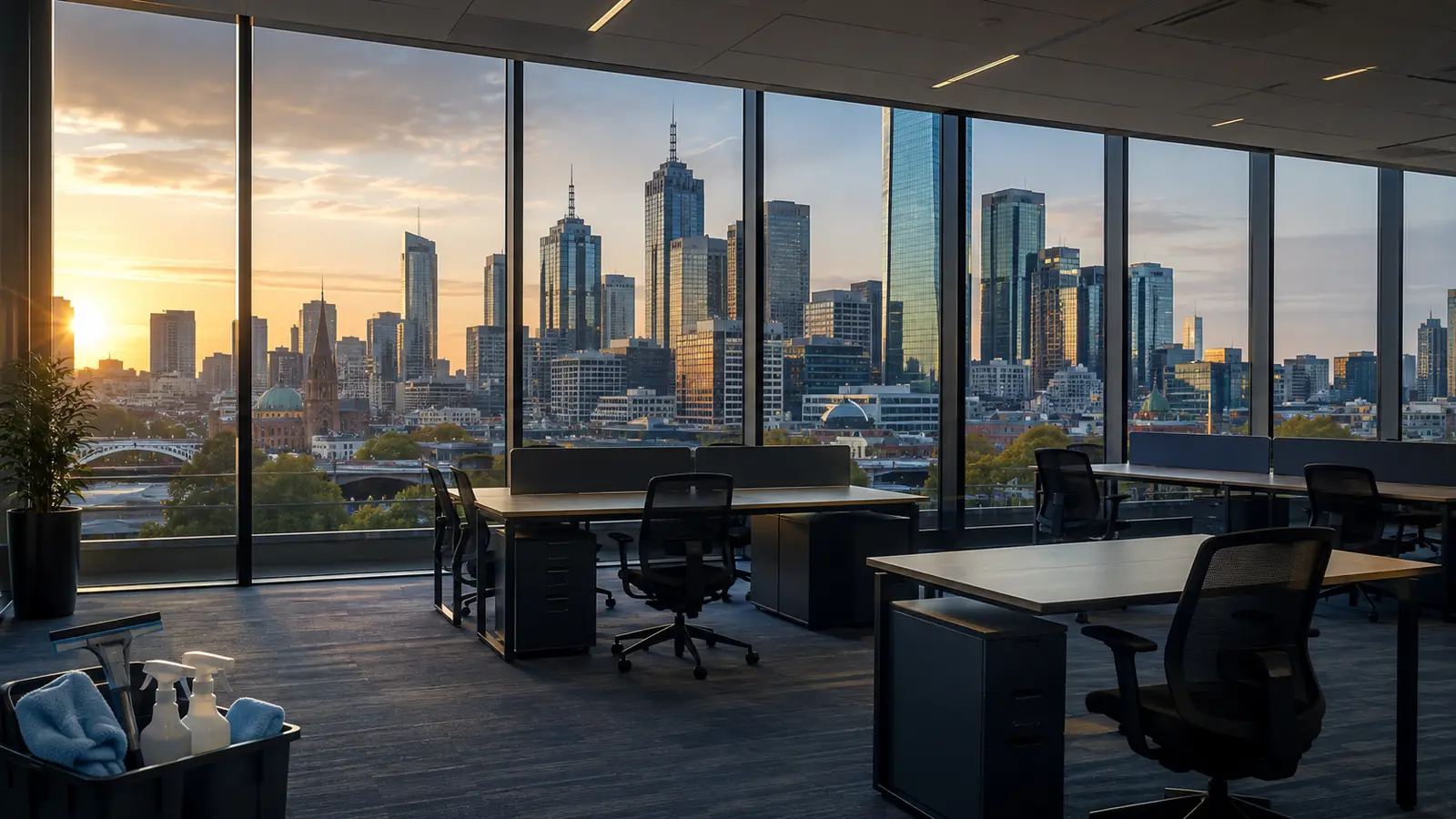 Evening work where a building cannot have crews on site during trade
How are programs priced and what are the terms?
A fixed price per visit, agreed before the first clean and held for the term. There is no lock-in period, and a program can be paused or stopped with reasonable notice if it is not working.
The per visit price is built the same way any quote is: access method, glass area, elevations, timing and how much work the first clean will take. Once a building is on a schedule, the visits after the first are usually cheaper, because maintained glass takes less time than neglected glass.
We hold the rate for the agreed term rather than adjusting it mid-year. If something structural changes, a tenancy fit-out that adds glass, a facade upgrade, a change of access, we requote that part and leave the rest alone, with the change in writing before it takes effect.
There is no exit fee and no automatic rollover into a longer commitment. That is deliberate. A cleaning contract should survive because the glass looks right and the invoices match the quote, not because leaving is inconvenient. Every figure behind a program visit is broken down under commercial window cleaning cost, including what makes one building dearer than the next.
- Fixed per visit, not an hourly rate that drifts.
- No lock-in term and no exit fee.
- Changes in writing before they appear on an invoice.
- Pause available for shutdowns, refits and quiet periods.
- Portfolio invoicing that lists sites rather than pooling them.
How do you start a program?
One site visit, one written schedule, then the first clean. We walk the building, agree the scope and frequency, price it, and put the dates in before anyone signs anything.
Portfolios work the same way with more walking. Send the addresses and we will come back with a calendar covering all of them. Start at get a quote, or read how the whole service fits together on commercial window cleaning in Melbourne.
- Dates for the whole year, issued before the first visit.
- Scope in writing, including what is excluded.
- Insurance and method statements provided at onboarding.
- Frequency reviewed after the first few visits, up or down.