
Rope Access Window Cleaning in Melbourne
Abseil crews reach glass that machines cannot: stepped facades, light wells, feature fins and towers with nothing on the roof but anchors. No scaffold, no road closure, and the footpath stays open while the work happens.
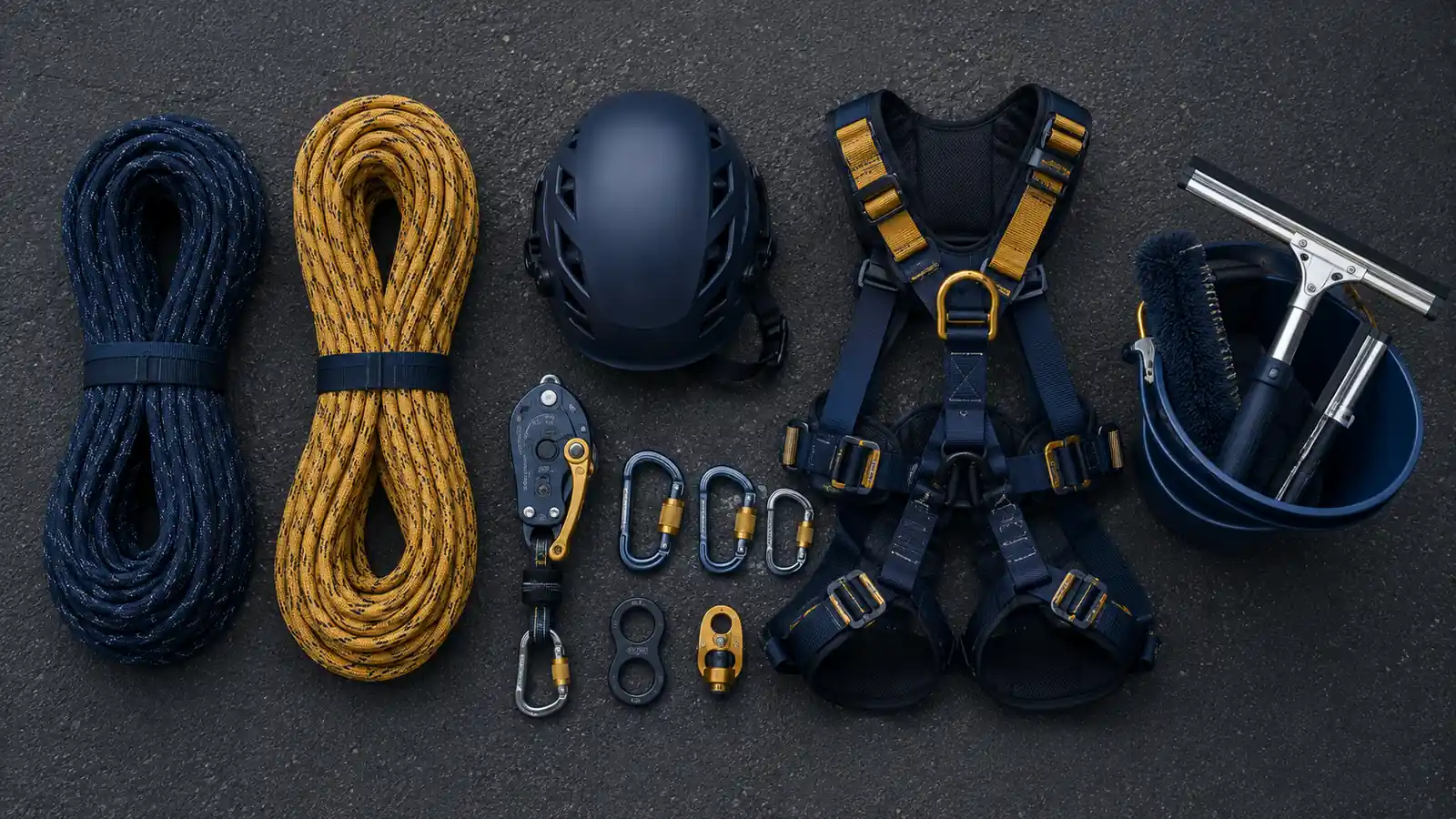
- 2ropes per technician
- 3IRATA grades
- 0scaffold required
Rope access window cleaning is industrial abseiling put to a very ordinary purpose: getting a person to a pane of glass that sits too high to reach any other sensible way. A technician works from two ropes anchored at the roof, descending the facade in strips and cleaning as they go. It is the method behind most tall building work in this city, and on a lot of facades it is the only method that fits.
This page is for the building manager, strata manager or owner weighing it up against the alternatives. Most people arrive here with the same three questions. Is it safe. Is it cheaper than putting a machine in the street. And will it disrupt the tenants. The short answers are yes when it is done under the industry system, usually, and far less than you would think.
We use rope on towers, on mid-rise buildings with awkward geometry, on apartment blocks where balconies block everything else, and on any facade where a lift cannot physically get to the glass. It pairs with pole work at the bottom of the building and with a cradle where one exists. If you want the wider picture of which method suits which building, start at our window cleaning services page and come back.
What is rope access window cleaning, exactly?
A rigging system, not a stunt. The technician hangs from a working line with a descender, and carries a second independent line with a backup device that grips if the first one ever fails. Both are anchored separately at the top.
That two-line principle is the whole safety argument in one sentence. Every part of the system that holds a person is doubled, so no single component failing puts anyone on the ground. The technician is attached to both lines the entire time, from stepping over the parapet to standing back on the footpath.
The cleaning itself is unremarkable once they are in position. Water and a wash tool go over the pane, a squeegee takes it off, the frame and sill get wiped, and the technician lowers to the next pane. A full strip of a building, top to bottom, takes as long as the glass takes, which is why quotes talk about drops rather than hours.
The trade is regulated by training rather than by machinery. Technicians qualify through a system of graded certification, log their hours under supervision, and requalify on a fixed cycle. If you want the mechanics without the sales pitch, what rope access really involves covers the ropes, the devices and the grades in plain language.
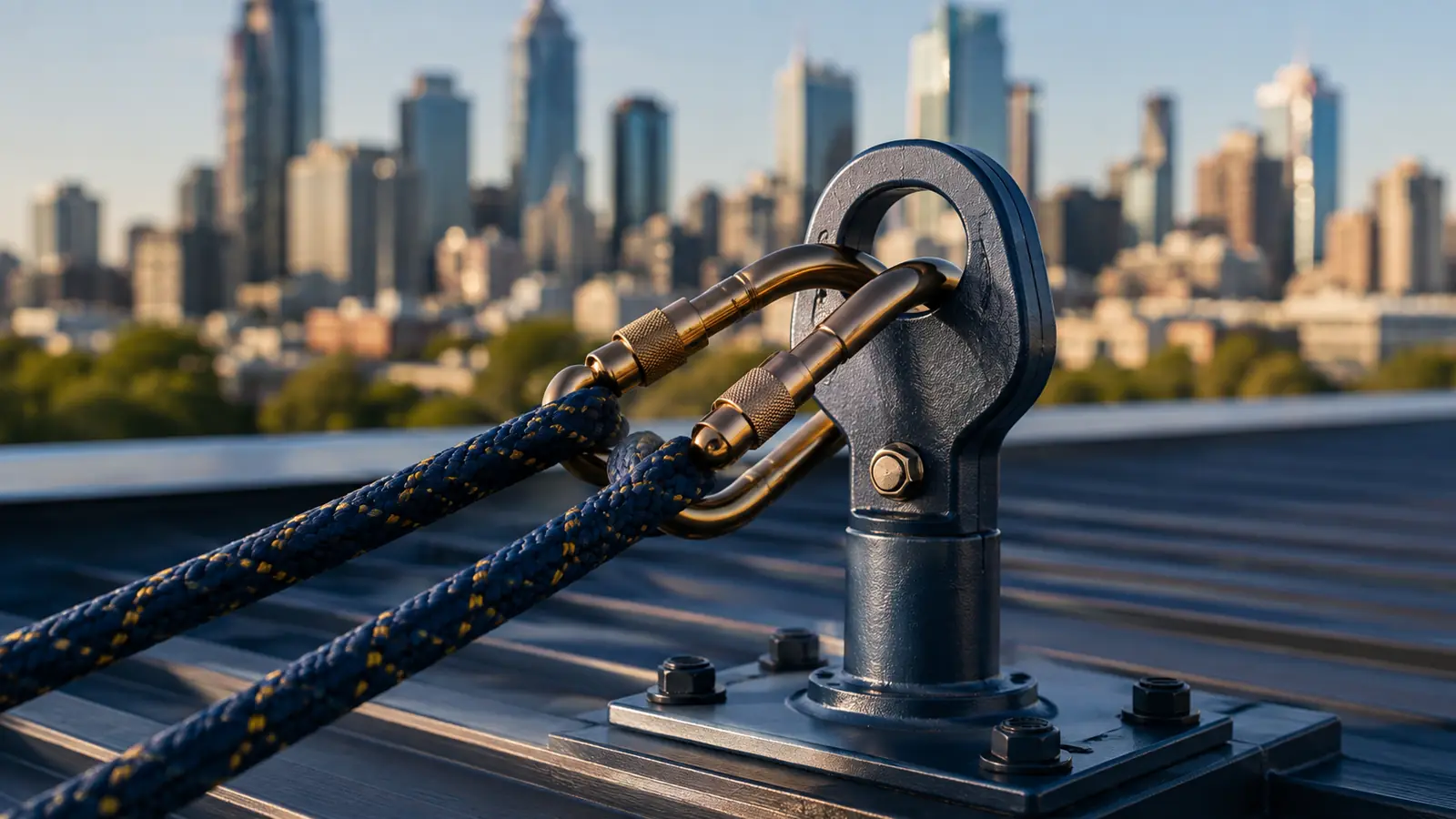 Two lines, two anchors: the working rope carries the technician, the second catches them if it ever fails
Why do building managers choose rope over a machine?
Cost and disruption, in that order. A rope crew arrives in a van and works from the roof. The alternatives need a truck in the street, ground that can take the weight, and often a permit before anyone touches the glass.
| Method | What arrives on site | Street impact | Reaches awkward facades | Relative cost |
|---|---|---|---|---|
| Rope access | A van and two technicians | An exclusion zone at the base | Yes, anywhere with an anchor above | Lowest of the three tall options |
| Scaffold | Trucks, crew, days of build time | Footpath occupied for the whole job | Yes, but slowly and at a price | Highest |
| Boom lift | A truck and a licensed operator | Needs hardstand, often a permit | Only where the machine can stand | Middle, plus hire and traffic costs |
| Building cradle | Nothing, it is already on the roof | Almost none | Flat elevations only | Lowest where one exists and works |
The table flatters rope, so here is the other side of it. Where a building has a cradle that covers the whole facade and is in service, that cradle will beat rope on price every time, and we will tell you so. Where the glass is low enough for a pole, the pole wins. Rope earns its place in the gap between those two, which on Melbourne's building stock is a very wide gap.
There is a third argument that rarely reaches the quote: what each method does to the rest of your maintenance. Scaffold blocks the facade for other trades. A lift blocks the loading dock. A rope crew occupies a strip of roof and a strip of footpath, so a glazier, a painter or a sign installer can still get their own work done the same week.
Disruption is the part managers underestimate. Scaffold changes how people enter the building for weeks. A boom lift takes parking, sometimes a lane, and puts a machine in front of the entrance. A rope crew needs a patch of footpath cordoned for the day and a place to park. For a retail tenancy or a busy lobby, that difference is worth more than the price gap.
What certification sits behind the crew?
The people on the ropes hold IRATA certification and work to the three-grade structure that body publishes. A qualified supervisor is on site for the descent, and every job carries a written rescue plan naming who recovers a technician and how.
The grading matters more than it sounds. Level one technicians perform the work under supervision. Level two carry rigging responsibility and rescue skills. Level three supervise the site, sign off the rigging and take charge if anything goes wrong. A compliant job needs the right mix on site, not just people who can descend a rope.
Equipment is the second half. The gear each technician wears and clips into, from the descender to the backup device to the rope itself, is inspected before every use, logged, and retired at the end of its service life whether or not it still looks sound. That inspection regime is why rope access has the safety record it does, and it is also why a cheap quote should make you ask what gear is being used and how old it is.
The training body publishes its own code of practice, which is worth a look if you are the person who signs the contractor in: IRATA International. How the duties fall on your side of the fence is covered in window cleaning safety and compliance in Victoria.
- Two independent systems on every technician, anchored separately.
- A supervisor on site who signs off the rigging before the first descent.
- A rescue plan per building, with the equipment listed and the responder named.
- Logged equipment, inspected before use and retired on schedule.
- Anchor records read first, because the system is only as good as what it hangs from.
Which buildings suit rope access?
Anything with sound anchors above the glass and a facade a machine struggles with. That covers most towers, stepped and recessed buildings, apartment blocks with balconies, atrium voids and anything sitting over an awning or a roof below.
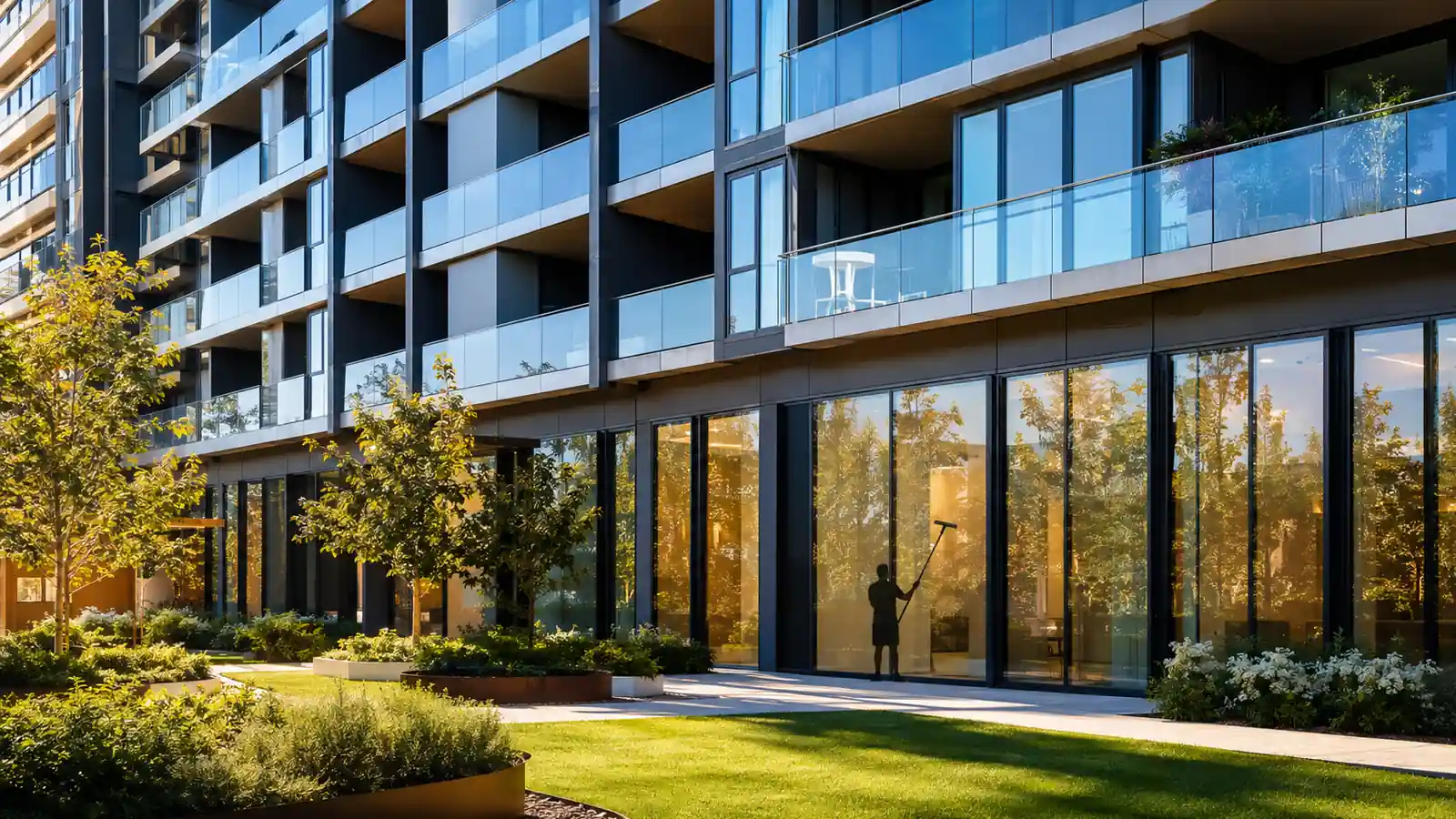 Balconies, recesses and set-back glass: geometry that stops a lift but not a rope
Balconies are the clearest example. On an apartment tower they project far enough to put the glass behind them out of reach of anything on the ground, and the cradle above often cannot swing past them either. A technician on rope simply works around and under each one.
Light wells and internal courtyards are the second case. There is no way to drive a machine into the middle of a building, so the only access is from the roof, straight down the void. The same goes for glass above a lower roof, a canopy or a podium, where a lift has nowhere level to stand.
Heritage and mixed facades are the third case, and the most common one outside the city grid. A building that started as a warehouse and grew a glass addition rarely has a surface a machine can work from, and the older brick sections often sit behind parapets that block a pole. Rope treats the whole envelope as one surface and works down it regardless of what each section is made of.
What rules rope out is the absence of anchors. No anchors and no engineered alternative means no rope, and any contractor who says otherwise is planning to tie into something that was never designed for it. Where a building has none, we quote what a machine can reach and tell you what is left uncovered, rather than pretending the whole facade is available.
What does a rope day look like on site?
An early start, a roof setup, a cordon at the base, and technicians working down the building through the morning. Most of the noise happens before anyone leaves the parapet, and tenants usually notice only when a technician passes their window.
- Sign inSite induction, keys and roof access sorted with building management, usually before the first tenants arrive.
- Rig and checkAnchors inspected, ropes and rescue gear rigged, and the supervisor signs the setup off.
- Cordon the baseExclusion zone and signage go in below, with a spotter where the public passes close.
- Work and packDrops run through the day, then ropes come off the roof and the cordon comes down before dark.
Tenant communication is the part that decides how the day is received. We write a short notice for you to circulate: the dates, which elevations are affected, and a reminder to close windows and draw blinds if privacy matters to someone. Sent a few days ahead, it turns a surprise into an expectation.
Access inside the building matters as much as access outside it. Technicians need a route to the roof, which usually means a lift booking, a key or a swipe, and somewhere to leave gear that is not a fire exit. Agreeing that once, at the first visit, saves an argument at seven in the morning every time after. On a program the same crew returns, so the routine is already known.
Noise is minimal. There is no generator, no boom alarm, no scaffold being erected. The loudest thing on a rope job is usually the squeegee on the glass, which is why this method suits occupied offices, medical suites, hotels and apartment buildings where a machine would be intolerable.
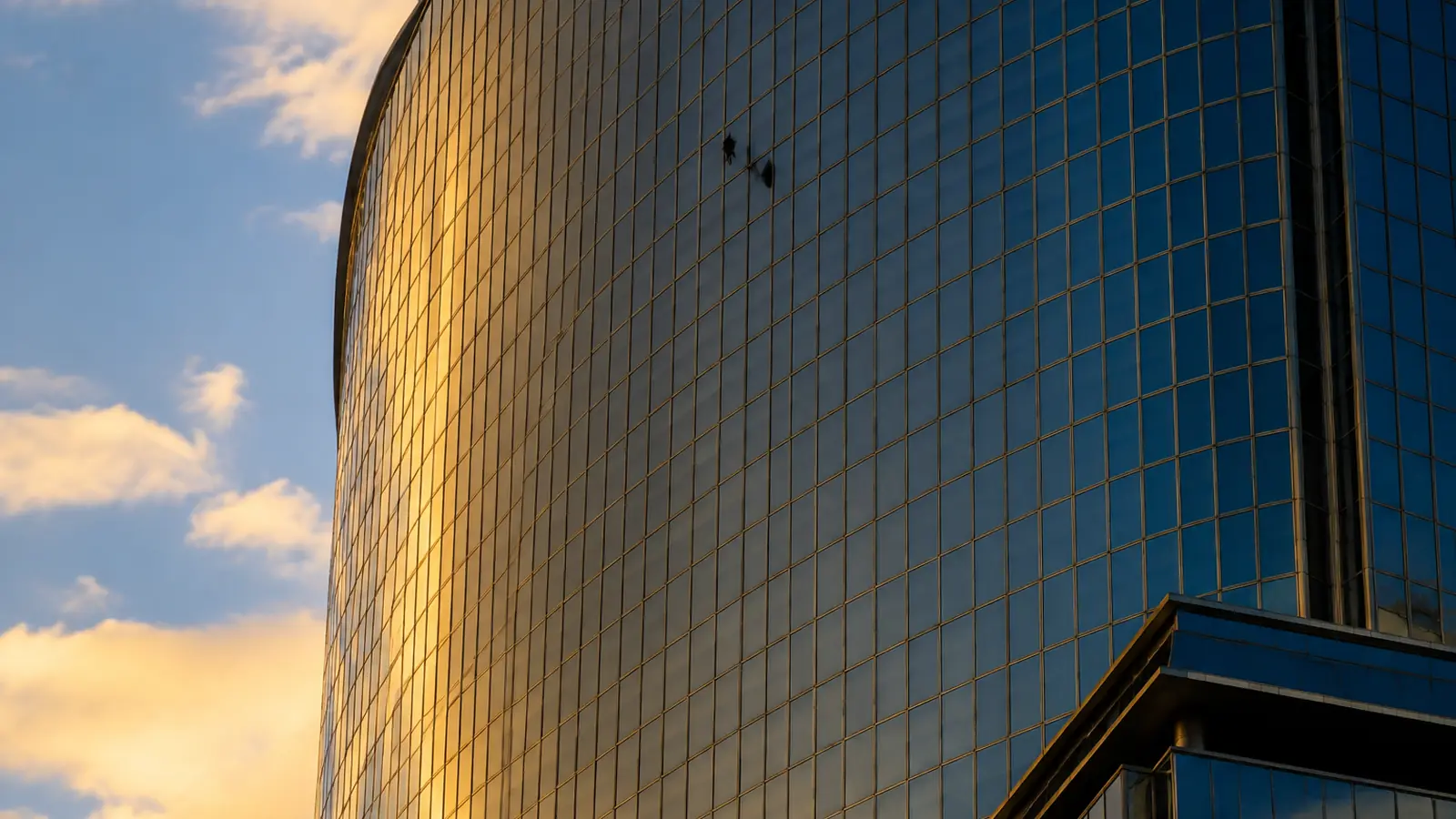 Occupied buildings: quiet work, notice in advance, blinds down where privacy matters
Where in Melbourne do we run rope work?
Wherever the buildings are tall, which in practice means the city grid, the river precincts and the office spine along St Kilda Road. Each area sets its own constraints on how a drop is planned.
- The city grid. Footpaths are busy from early, so cordons are tight and timed, and lane-way buildings often have nowhere for a machine at all. Details on window cleaning Melbourne CBD.
- The river towers. Tall residential and mixed-use stock where balconies and privacy shape the day. See window cleaning Southbank.
- The office boulevard. Buildings set back from the road with car parks beneath, so access is about lifts and loading docks rather than pedestrians. See window cleaning St Kilda Road.
Wind is the constant across all three. Between towers it funnels and gusts well above what the street-level forecast suggests, so tower bookings carry spare days and crews start early while the air is still. Losing a morning to gusts costs you nothing extra, since we quote the elevation and not the time it takes to finish it.
Outside those precincts we run rope on suburban office buildings, hospitals, hotels and schools wherever the height justifies it. If your building sits somewhere unusual, send the address and we will tell you whether rope is the sensible answer or whether something simpler will do the job.
How is rope access work priced?
By technician days, not by the pane. We work out how many drops the facade needs, how long each takes given the geometry, and how much rigging and packing sits around them, then quote the building as one fixed figure.
Three things move that figure. The width of the building sets the number of drops. The complexity of the facade sets how fast each drop runs, because fins, recesses and balconies mean working around obstacles rather than straight down glass. And the state of the glass sets the first visit, since a facade left for years needs the deposits worked off rather than washed off.
Frequency changes the arithmetic too. A facade on a twice-yearly cycle never accumulates the deposits that make a first clean slow, so each visit runs faster than the one before it until the building settles into a rhythm. Buildings that call only when the glass looks bad pay the first-visit premium again every time.
Setup does not scale with height, which is the counterintuitive part. Rigging the roof, cordoning the base, inducting the crew and packing down take much the same time on a 12-storey building as on a 30-storey one. That is why the per-floor cost of a taller building is often lower, and why splitting a facade across two visits costs more than doing it in one.
What we do not do is charge by the hour. An hourly rate would shift the weather risk onto you and reward a slow crew, neither of which is fair when we are the ones choosing the method. Every factor that moves a number, across all eight services, is laid out on the commercial window cleaning cost page.
Ask what the price includes for rigging, rescue equipment and the supervisor. If a quote is well under the others, something in that list is usually missing, and it will not be the part you notice until it matters.
How do you book an assessment?
Send the address, the number of storeys and whatever you know about the roof: anchors, a cradle, or neither. For most buildings that is enough to price the work without anyone visiting first.
Where the facade is complicated or the anchor situation is unclear, we will book a short look at the roof and the base before quoting, so the number we give you is the number you pay. Send the details through and get a quote, or read how rope fits alongside cradle and pole work on our high rise window cleaning page.
- Certification and rescue plan sent before the crew is booked in.
- Tenant notice written for you, ready to circulate.
- One crew for the ropes and the ground-level glass.
- New to this? Start with commercial window cleaning in Melbourne.