
Commercial Window Cleaning in Melbourne CBD
Towers on Collins and Bourke, laneway shopfronts, and everything in between. In the grid the constraint is rarely the glass, it is the footpath underneath it and the hour of the day you are allowed to be there.
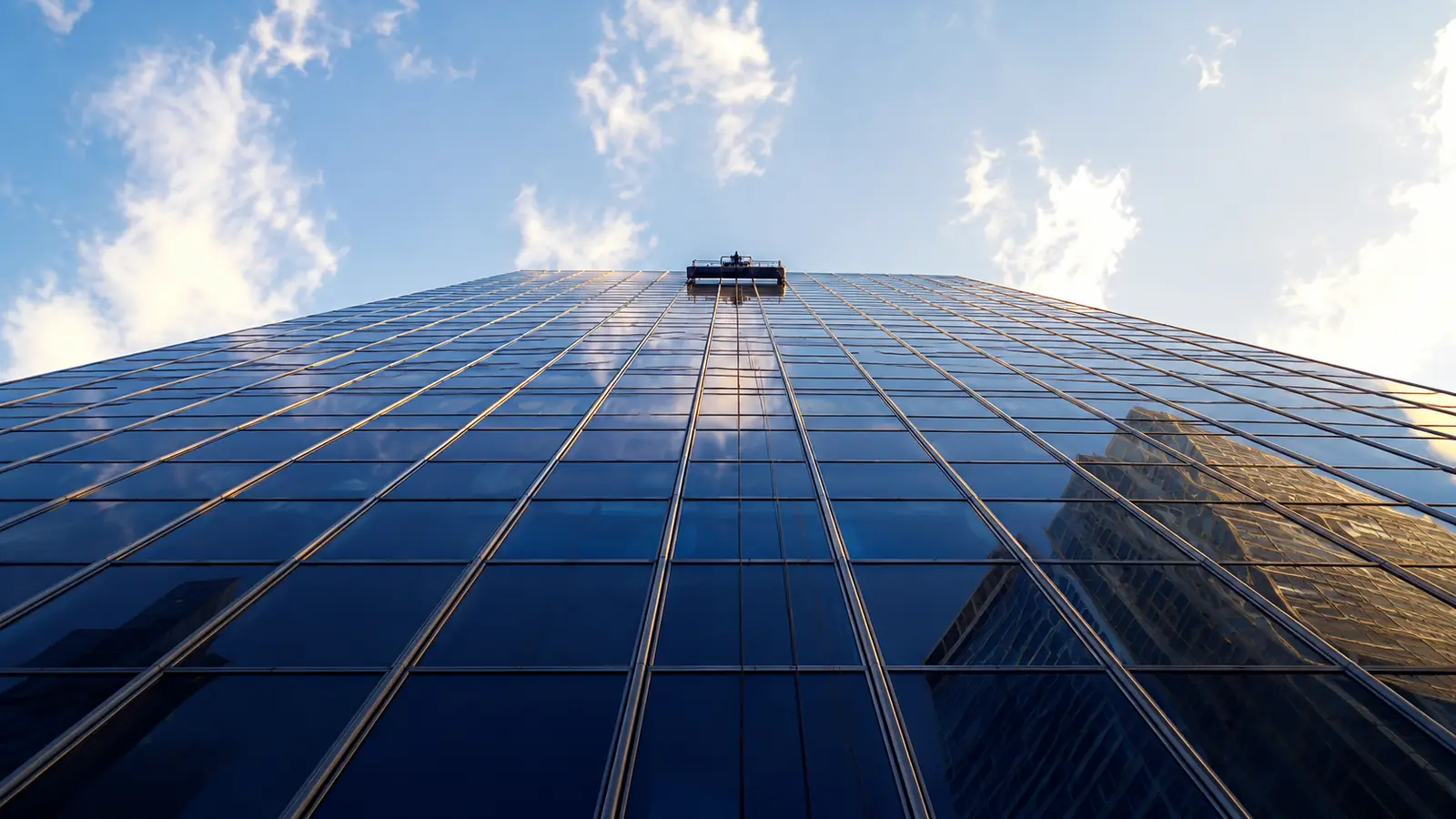
- Rope and BMUthe usual methods
- Early startsbefore the footpath fills
- Permitshandled where ground work is needed
Commercial window cleaning in Melbourne CBD covers a narrower square of ground than any other precinct we work, and a wider range of buildings. Inside the Hoddle Grid you have premium office towers with their own roof cradles, 1980s stock with anchors that may or may not still be certified, Victorian frontages with sash windows, and laneway tenancies whose whole shopfront is one pane of glass.
What connects them is the street. Almost every building in the grid meets a footpath that carries people from before seven in the morning until late at night, with trams down the middle of most of it and loading zones fought over by everyone. So the access plan comes first and the cleaning plan follows, which is the reverse of how it works in the suburbs.
This page is about what that means for your building specifically. For the other precincts we cover and how they differ, start from areas we serve across Melbourne.
What does commercial window cleaning in Melbourne CBD actually involve?
Mostly tower work from ropes or a building maintenance unit, done early, with the ground level handled separately. The grid's mix of premium towers and heritage frontages means one address can need two completely different methods.
The eastern end around Collins and Exhibition carries the newest stock, and much of it was designed with facade access in mind. Those buildings have roof cradles, davit sockets and anchor points installed at construction, which usually makes them the most straightforward towers in the city to maintain.
Move west towards Queen and William and the picture changes. A lot of that stock went up between the seventies and the nineties, before facade access was designed in, so anchors were retrofitted and their certification is the first thing to check. Plenty of it is perfectly workable, but nobody should assume it until a roof inspection says so.
Then there are the frontages that predate all of it. Flinders Lane, Hardware Lane and the little arcades off Bourke carry painted timber, leadlight and older plate glass, cleaned by hand and pole at street level. Those jobs take minutes and matter enormously, because they are the part of the building the public actually looks at.
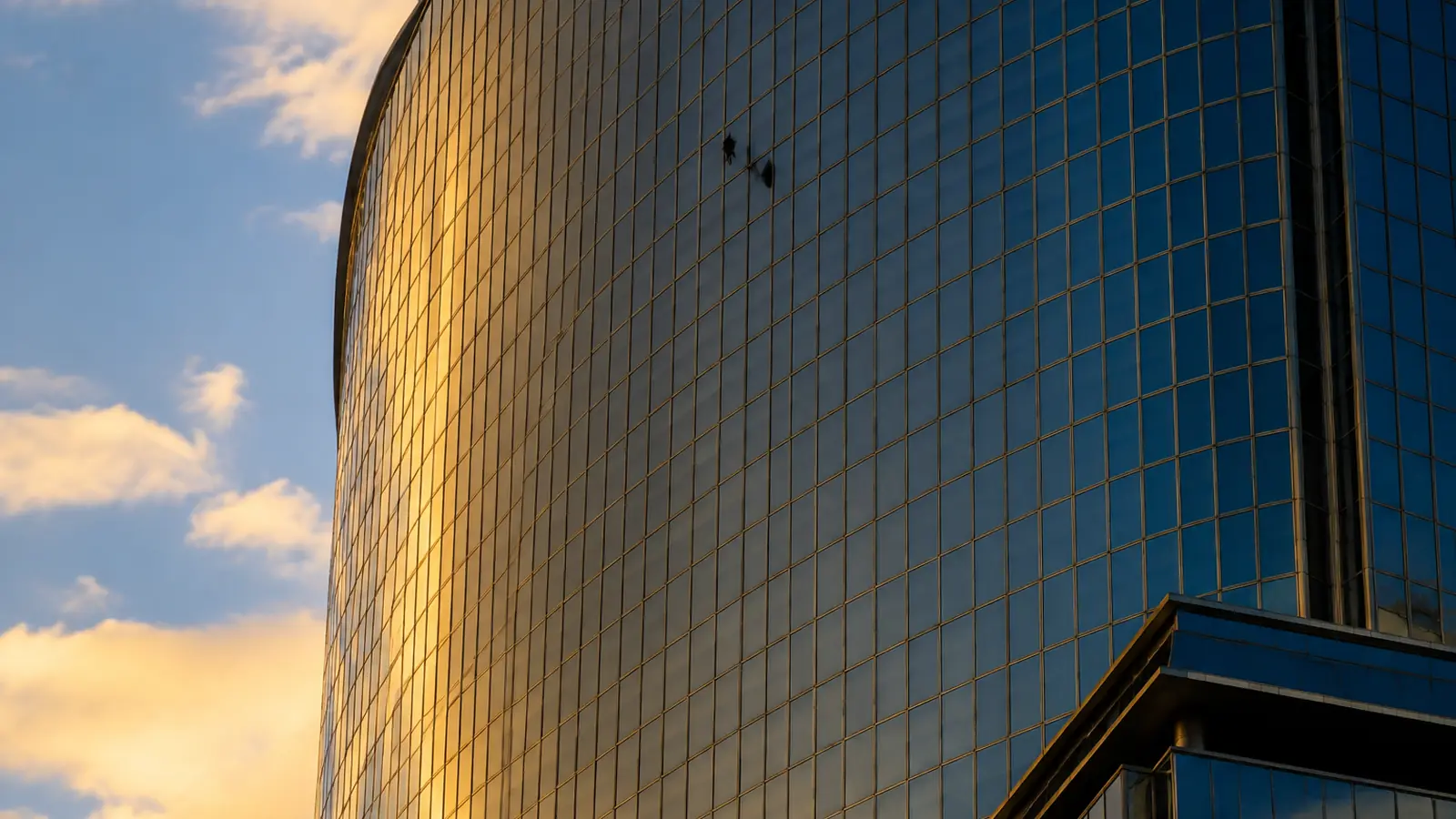 In the grid the access plan is written before the cleaning plan
How do you reach the glass on a CBD building?
By cradle where the building has one, by rope where it does not, and by pole at street level. Elevating platforms are the last resort in the grid, because there is rarely anywhere legal to stand one.
| Building | Usual method | What has to be checked first |
|---|---|---|
| Premium tower with a cradle | The building's own unit | Current inspection, operator familiar with that model |
| Older tower, retrofitted anchors | Rope access | Anchor certification and the condition of the roof edge |
| Mid-rise with a setback or plaza | Boom, occasionally | Whether the ground can be occupied and for how long |
| Heritage frontage | Pole and hand | What the glazing is, and whether sashes open inwards |
| Laneway tenancy | Hand, before trade | Deliveries, bins and how early the lane gets busy |
The reason platforms come last is street occupancy. Standing a boom on a CBD footpath or lane means a permit from the City of Melbourne, a traffic management plan, and a slot that competes with construction, deliveries and trams. By the time that is arranged, a rope crew has usually finished. Where a building genuinely has no roof access, a platform is still the right answer and we organise the approvals rather than leaving them with you.
Anchors are where CBD jobs go wrong most often. A certificate that expired two years ago is not a technicality: it means nobody has confirmed the steel will hold, and no reputable rope crew will hang off it. We check before quoting, and if yours needs recertifying we will say so plainly rather than quoting around it. The method itself is set out under rope access window cleaning.
Which services do CBD buildings use most?
External facade cleaning two to four times a year, internal office glass far more often, and shopfronts at ground level on a weekly or fortnightly round. Most CBD addresses buy all three under one arrangement.
The split exists because the three jobs have nothing in common. The facade is expensive to reach and slow to dirty, so it suits a few visits a year. Internal glass is cheap to reach and marked within days by hands and cleaning trolleys, so it suits monthly. The shopfront is judged by passers by every morning.
Where a building has several tenancies, the internal work is often arranged by the tenants and the external by the owners corporation or the managing agent. That produces two contracts on one address, which is fine, but it is worth making sure the scopes do not overlap or leave the atrium glass belonging to nobody.
The facade work itself is covered under high rise window cleaning, and the internal side under office window cleaning. Both get quoted separately for a CBD building even when we do them on the same day.
- Facade, two to four times a year on most towers.
- Internal office glass, monthly to quarterly.
- Lobby and entry, weekly on a busy building.
- Ground floor retail, before the doors open.
- Atrium and void glass, which is nobody's until it is written down.
What makes scheduling hard in the city?
Pedestrian volume, lift access and wind, in that order. The footpath never really empties, tenant lifts are booked weeks ahead, and the towers funnel gusts that stop rope work without warning.
Exclusion zones are the daily reality. Anything happening above a footpath needs the ground below it controlled, which means barriers, signage and usually a spotter. In a quiet street that is a five minute setup. On Swanston Street at lunchtime it is a genuine piece of work, and it is why CBD drops start early.
Lift access catches people out more than it should. Getting equipment to a roof usually means a goods lift, a booking, and a window that does not clash with a tenant fit-out. Buildings that book those for us in advance get cleaned faster and cheaper than buildings where the crew waits in the dock.
Wind is the one nobody controls. The grid channels it between towers, so a day that is calm at ground level can be unworkable at the thirtieth floor, and the call is made on the roof rather than from the forecast. When that happens the remaining elevations are rebooked at the price already agreed.
Where the building runs to a schedule rather than a phone call, all three problems shrink. Slots are held, lifts are booked as a standing arrangement, and a lost wind day moves to the next date instead of restarting the process. That is set up through scheduled window cleaning programs.
How do you price a building in the grid?
From the address, the storey count and what the roof has on it. CBD towers are usually worth a site visit, because anchors and lift access decide the method and the method decides the price.
Send the details and we will tell you what your building needs before quoting it. Start at get a quote, or read how the numbers are built on commercial window cleaning cost.
- Roof and anchor check before any rope price is given.
- Permits and traffic plans arranged by us, not left with you.
- Wind-stopped elevations rebooked at the agreed price.
- Facade, interiors and shopfront quoted as separate lines.