
Factory and Industrial Window Cleaning
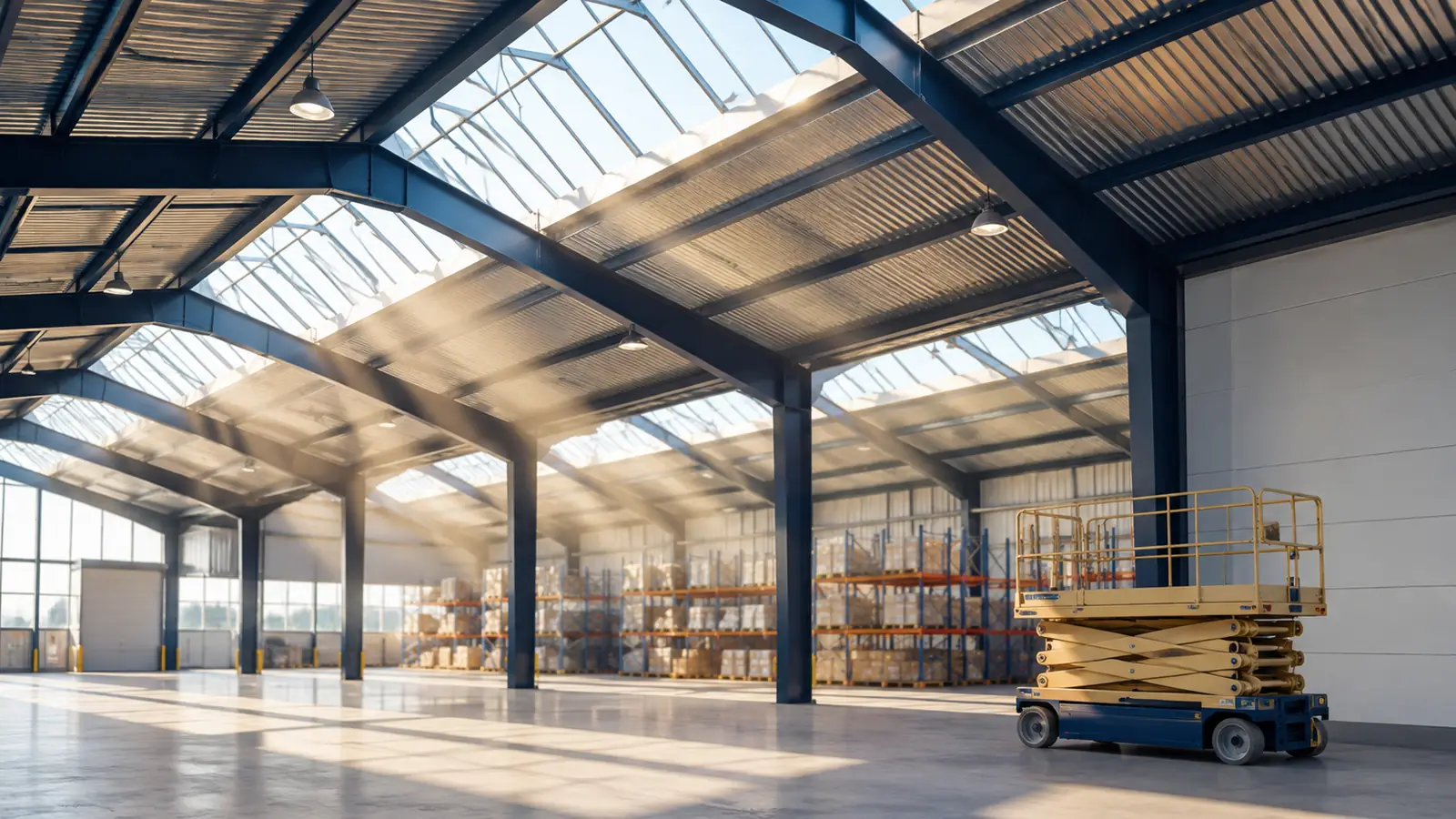
High warehouse glazing, sawtooth roof lights and the office front bolted to the side of the plant. Crews who complete your induction, work to your permits and stay clear of the forklift routes while production keeps running.
- Inductedbefore we start
- EWPor pole systems
- Shift-fittiming
Industrial window cleaning in Melbourne is less about the glass and more about everything around it. The panes themselves are usually simple: large, flat, and nobody is fussy about a perfect edge finish twelve metres above a racking aisle. The difficulty is getting a platform into that aisle safely while the plant keeps working, and doing it without stopping a single pallet movement.
We clean factory and warehouse glass across the industrial belt, from the older brick and sawtooth buildings around Port Melbourne and Brunswick through to the tilt-slab estates out past Laverton, Dandenong South and Campbellfield. Some of it has not been touched in a decade. That is normal, and it is usually the first visit that tells a site manager how much daylight the building had been throwing away.
The work splits into three parts that get quoted separately because they need different equipment: the high glazing inside the shed, the roof lights above it, and the office and amenity glass at the front. Every building type we work on, including this one, is listed under window cleaning services if you want to compare them.
How does industrial window cleaning work around operations?
By treating the plant as the constraint and the glass as the flexible part. We plan the route around your traffic, take one bay at a time under an agreed exclusion zone, and move when you need the space back.
A working factory is not a quiet building with some windows in it. There are forklifts on fixed routes, reach trucks that need the full aisle width, deliveries against a dock schedule, and machinery that cannot be interrupted for a window cleaner. Every one of those is a reason the job has to bend, not the site.
What that looks like in practice is a walk of the floor before we quote, with someone who knows how the place actually runs rather than how the layout drawing says it runs. We agree which bays can be closed and when, where the machine can be parked between moves, and who on your side gives the nod before each section starts.
The pace is slower than an empty building and we price it that way from the start. Pretending a live plant cleans as fast as a vacant one is how a job ends up half finished with an invoice for a variation, and that is the argument nobody wants on a Friday afternoon.
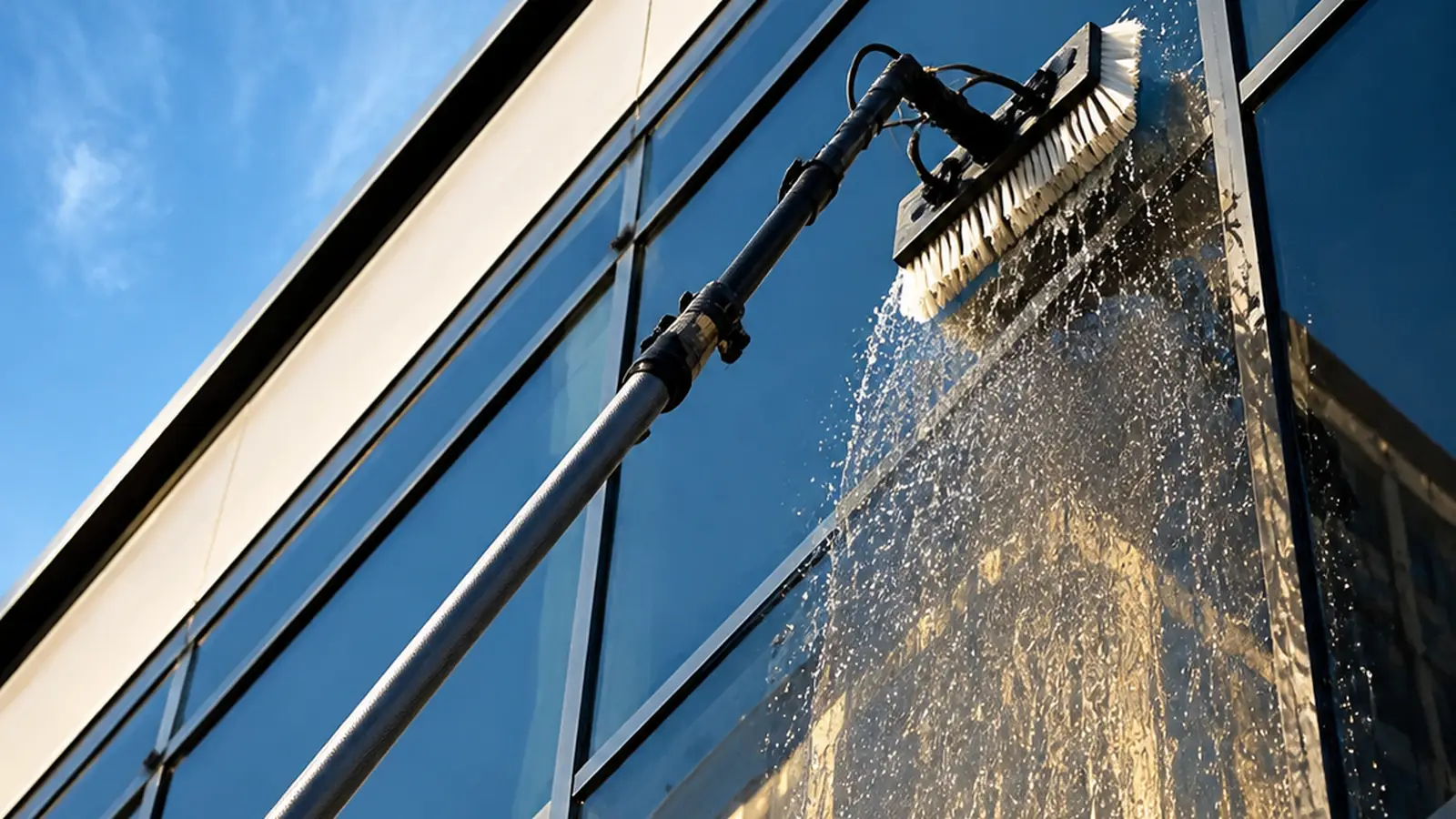 Pole systems keep the work off the floor where a machine cannot get in
How is high warehouse and sawtooth glazing reached?
Usually a scissor lift or boom inside the shed, a water-fed pole outside where the ground allows, and rope access on the sawtooth roofs where a machine cannot be positioned underneath.
| Where the glass is | Usual method | What decides it |
|---|---|---|
| High clerestory glass inside the shed | Scissor lift on a clear floor | Aisle width, floor loading, racking clearance |
| Glazing above racking that cannot be moved | Boom lift or extended pole | Whether anything can get underneath at all |
| Sawtooth roof lights | Rope access or roof-based work | Pitch, fragile sheeting, anchor availability |
| External walls to eight metres | Water-fed pole from ground | Hardstand surface, parked vehicles, yard traffic |
| Office front at the head of the building | Pole and hand finish | Height, whether the inside is included |
Sawtooth roofs deserve their own note because so many Melbourne factories have them. The glazing sits on a steep pitch, often on sheeting that will not hold a person, and the frames are old enough that walking the roof is a genuine hazard rather than a theoretical one. Where that is the case the work is done on rope from an anchor above, which keeps every load off the roof surface.
Not every site suits a machine. A floor with a suspended slab over a pit, a resin coating that cannot take the wheel loading, or an aisle that simply will not clear all push the job towards poles or rope. The methods themselves are the same ones described under rope access window cleaning, applied to a shed instead of a tower.
What about office fronts inside a plant?
They are cleaned like any commercial office, just on an industrial timetable. The glazed entry, the reception frontage, meeting room partitions and the amenity block windows all sit in the same visit as the shed glass.
Almost every factory has a two-storey office grafted onto the front of it, and that glass carries the whole impression of the business. Visitors never see the warehouse. They see a reception window with dust from the yard along the bottom rail and a door handle mark at chest height, and that is what they take away.
It is also the part of the site where inside cleaning matters. Shed glazing is nearly always done outside only, because the inside face collects process dust that will be back within weeks. Office and meeting room glass is the opposite: it is the inside that people look through, so both faces get done together.
Amenity areas are worth including for a different reason. Lunchroom and change room windows are usually the most neglected glass on any industrial site, and they are the windows your own staff look out of every day. Cleaning them costs very little once a crew is already on site.
- Reception and entry glazing, inside and out, plus the door glass.
- Internal partitions around meeting rooms and the production viewing window.
- Amenity and lunchroom windows, normally skipped by everyone else.
- Frames, sills and tracks on the office side, where yard dust settles.
- Quoted as one visit with the shed glass, not as a separate call-out.
What do crews do before starting on site?
Complete your induction, sign in under your system, work to whatever permits the task needs, and set up the exclusion zone your site requires. Nothing starts until that is done and someone on your side has signed it off.
- Induction firstWhatever format you run, online or on site, the whole crew completes it before the first visit rather than at the gate.
- Permits as requiredWorking at height and any hot or confined space adjacency handled through your permit system, not ours.
- Exclusion zonesBarriers and spotters agreed before the machine moves, so pedestrians and forklifts have a defined route around us.
- Plant and licencesBoom operators hold a high risk work licence, and machine logbooks and pre-starts are available on request.
Industrial sites ask harder questions than office buildings, and rightly so. A window cleaner on a scissor lift in a live aisle is one of the more exposed activities that happens on a plant floor in a given month, so the paperwork exists for a reason. We expect to provide a safe work method statement specific to your site, not a generic one with your name typed into the header.
Drug and alcohol policies, PPE standards and site-specific rules about phones or cameras all apply to us the same way they apply to your contractors. What the Victorian rules actually require of anyone working at height is set out in our guide to window cleaning safety and compliance in Victoria.
When does the work fit around shifts?
Usually during a shutdown, a shift changeover, or the quiet window between the last dispatch and the next production run. On a twenty-four hour site we work bay by bay instead of waiting for a gap that never comes.
The easiest industrial jobs are booked against a planned shutdown. Christmas, Easter and the annual maintenance window are when the floor is clear, the machines are off and a lift can go anywhere. If your site has one of those, that is when the high glass should be done, and it is worth putting in the maintenance calendar a year ahead.
Failing that, changeovers work well. There is usually a half hour either side of a shift change when the floor thins out, and a crew that is already set up can cover a lot of glazing in that window. It takes more visits to finish the building, but it takes nothing out of production.
Continuous operations get the bay-by-bay approach instead. We close one section, clean it, hand it back and move on, with the schedule agreed at the start so your supervisors know what is closed on which day. It is slower and it costs a little more, but nothing stops.
Most sites settle on annual or twice yearly for the high glass and something more frequent for the office front. Setting it up as a standing arrangement is covered under scheduled window cleaning programs, which is also how the shutdown slots get reserved before they fill.
What drives the price on an industrial site?
Access time, not glass area. Getting a machine to a pane and setting up safely takes far longer than cleaning it, so anything that slows the setup is what moves the number.
On a clear floor with a lift that can drive straight to the wall, a large area of high glazing is quick and the rate per square metre looks cheap. Put racking under the same glass, add a live forklift route and a permit for each bay, and the identical building takes three times as long without a single extra pane.
Machine hire is the other lever. If your site already has a scissor lift with a current inspection and an operator we can work alongside, that comes off the quote. If we have to bring one in and float it to the address, that cost is listed separately so you can see it rather than finding it buried in a rate.
Neglect adds time on the first visit only. Glass that has carried a decade of process dust and rain marks needs a proper wash before it will clear, and we quote that first clean higher and the following ones lower. The full breakdown of how commercial jobs are priced sits on our commercial window cleaning cost page.
- Floor access decides more than anything else on the quote.
- Your own plant used where available, and taken off the price.
- Roof lights quoted separately because they need a different method.
- First clean higher after years of neglect, then a lower standing rate.
- Fixed price in writing, with exclusions named rather than implied.
How do you get your site quoted?
Send the address, the approximate eave height, whether there is racking under the glass, and what your site does with shutdowns. That is enough for a written price on most buildings.
Larger plants are better walked, and we would rather spend an hour on your floor than guess at the access. Book that with get a quote, or look at the wider picture on commercial window cleaning in Melbourne first.
- Inductions completed before the first visit, not at the gate.
- Site-specific method statement, not a template with your name on it.
- Bay-by-bay work where production cannot stop.
- Shutdown slots reserved ahead so the clear floor is not wasted.